Alcoholic liver disease treatment in KPHB starts by answering one question precisely: how much
damage has alcohol already caused? At Gokul Gastro & Liver Care, Dr. Viswanath Kamisetty
(MBBS, MD, DM Medical Gastroenterology) grades that damage on the same day, and our on-site
FibroScan measures liver stiffness within minutes — so you leave with a stage, a plan and
a timeline instead of a vague warning.
Treatment rests on three pillars: accurate staging, complete alcohol cessation and
stage-matched medical care, and each pillar depends on the other two. Staging comes first,
because treatment for fatty liver differs entirely from treatment for cirrhosis, and honest
staging prevents both panic and false comfort.
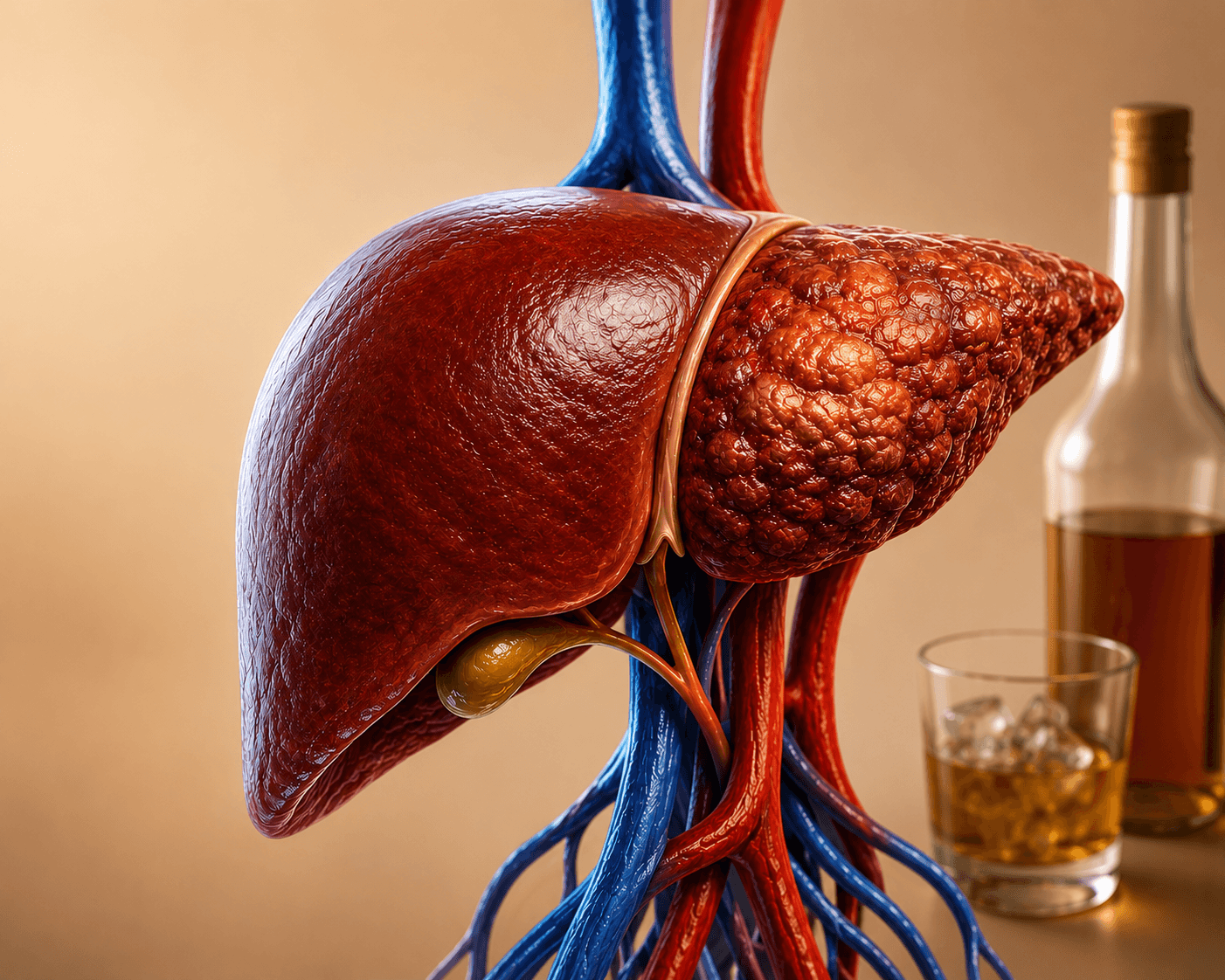
Your liver breaks down almost every drink you take, but that process creates
toxic by-products each time. Repeated exposure inflames liver cells and stores fat inside them
— fat alone rarely hurts, but inflammation eventually scars the tissue, and scar tissue
cannot filter blood, store sugar or make clotting proteins. As a result, the whole body feels
the loss.
Alcohol-related liver disease treatment works precisely because the liver repairs itself
remarkably well. The earlier you start, the more tissue you save — in short, timing
decides the outcome, which is why staging comes before anything else at your first visit.
The four stages of alcoholic liver disease
Each stage needs a different response, so knowing exactly which one you're at changes everything
about the plan.
Stage 1 — alcoholic fatty liver
Fat builds up inside liver cells while most people feel completely normal, so a
routine scan usually finds this stage by accident. The good news: fatty liver
reverses almost fully within weeks of stopping alcohol, and treatment at this
stage often needs no medicine at all.
Stage 2 — alcoholic hepatitis
The liver becomes actively inflamed, and symptoms arrive quickly, often after a
heavy drinking spell — jaundice, fever and abdominal pain are common.
Alcoholic hepatitis treatment in KPHB becomes urgent here; severe cases carry
real risk, so we assess and admit or refer without delay.
Stage 3 — liver fibrosis
Scar tissue now replaces working liver cells, but the liver still compensates, so
symptoms stay mild and easy to dismiss. FibroScan detects fibrosis long before
symptoms appear, which is why we scan every patient at the first visit —
fibrosis remains partly reversible, while cirrhosis largely does not, so this
stage changes everything about the outcome.
Stage 4 — alcoholic cirrhosis
Widespread scarring stiffens the entire organ, and blood backs up into the spleen
and food pipe — complications such as abdominal fluid and bleeding veins
can follow. Cirrhosis never fully undoes itself, but treatment halts
progression, and careful management prevents most complications for years.
Symptoms
Symptoms that need a liver specialist for alcoholic liver
disease
Early disease whispers rather than shouts. Still, these early signs matter — and later ones
are harder to miss.
Constant tiredness
Fatigue that sleep does not fix, day after day.
Dull ache below the right ribs
A heaviness rather than sharp pain, often dismissed as nothing.
Loss of appetite and mild nausea
A quiet drop in interest in food, easy to overlook.
Unexplained weight loss
Weight dropping without a change in diet or activity.
Poor concentration through the afternoon
Mental fog that sets in later in the day.
Later signs prove harder to miss, and usually mean scarring has progressed: yellow eyes or yellow
skin, a swollen abdomen or swollen ankles, dark urine with pale stools, easy bruising and frequent
nosebleeds, confusion, drowsiness or disturbed sleep, and itching across the body. Any single sign
above deserves review; two or more together deserve review this week — early treatment saves
far more tissue than late rescue.
Causes
How much alcohol it actually takes
Quantity, pattern and duration all matter, and a few factors lower the threshold considerably.
How much alcohol it takes
Risk rises sharply beyond roughly 30 grams daily for men and 20 grams for women — a
level many regular drinkers cross without realising it.
Drinking pattern
Regular heavy drinking and binge drinking both injure liver cells directly, over years of
exposure — pattern matters as much as quantity.
Genetics
Genetic predisposition can lower the amount of alcohol it takes to cause damage
considerably, so family history is worth mentioning at your first visit.
Obesity
Carrying extra weight compounds alcohol's effect on the liver, pushing two drivers of
scarring together rather than one.
Viral hepatitis co-infection
Chronic hepatitis B or C alongside alcohol use accelerates damage well beyond either cause
alone — both get checked at the same visit.
How the injury builds
Every drink creates toxic by-products as the liver breaks it down. Repeated exposure
inflames liver cells and stores fat inside them, and that inflammation is what eventually
scars the tissue.
Diagnosis
Alcoholic liver disease diagnosis in KPHB — a fixed
sequence
Accurate staging drives every treatment decision, so we follow the same sequence with every
patient.
1
History and examination
Quantity, pattern and duration of drinking, recorded without judgement, alongside a
clinical check of liver size, spleen size, fluid and jaundice.
2
Liver function tests
Bilirubin, AST, ALT, GGT, albumin and INR together reveal the pattern of injury, though
these can look almost normal even in advanced fibrosis.
3
FibroScan on site
Painless stiffness and fat readings in under ten minutes, with no needle, no dye and no
long fast. Results print immediately, so diagnosis and plan happen in a single
visit.
4
Ultrasound abdomen
Checks liver texture and size, portal blood flow, and any focal lesions that need a
closer look.
5
Targeted extra tests, only when indicated
Viral markers, iron studies or endoscopy, ordered only where the earlier steps point to
them — not as a routine bundle.
Treatment
Alcoholic liver disease treatment in KPHB — options by
stage
Treatment follows your stage, not a template. These are the options we choose from.
Complete alcohol cessation
Chosen at every stage, without exception. Stopping alcohol remains the only
step that changes the disease itself — no medicine replaces it.
Quitting suddenly after heavy long-term use can turn dangerous, so we
plan withdrawal safely and arrange de-addiction support when needed.
Every plan begins here.
Nutritional rehabilitation
Chosen when malnutrition, muscle loss or poor appetite appears. Alcohol
displaces food for years, so protein, thiamine, folate and zinc run low.
We correct these deficits deliberately — adequate protein protects
muscle and lowers confusion risk.
Medical therapy for alcoholic hepatitis
Chosen when scoring confirms severe inflammation. Selected patients benefit
from a short steroid course; we monitor response closely and stop early
without benefit, with infection screening always coming first.
Complication management in cirrhosis
Chosen when decompensation has already begun. Fluid, bleeding risk and
confusion each need specific control — diuretics, salt limits,
band ligation and lactulose all carry defined roles, alongside cancer
surveillance scans twice yearly.
Transplant assessment and referral
Chosen when cirrhosis advances despite abstinence. Some livers cannot
recover, so timely referral matters far more than late heroics; we
coordinate assessment with established transplant centres.
Structured long-term follow-up
Chosen after every stage, once treatment begins. Repeat FibroScan tracks
real change over months — watching stiffness fall motivates people
far more than advice does, and this measurement loop is what long-term
treatment depends on.
DM remains the highest specialist qualification in this field across India, so a
super-specialist reads your liver rather than a general physician. Dr. Kamisetty treats liver
disease without moralising — consultations focus on what you can still save. Many
patients arrive expecting a lecture; instead, they receive a plan. As an alcoholic liver disease
specialist in Hyderabad, he manages fatty liver, hepatitis, fibrosis and cirrhosis daily, and
families join every discussion when patients wish. Kukatpally sits within easy reach of
Miyapur, Bachupally, Nizampet, Madinaguda and Gachibowli, so many patients seeking an alcoholic
liver disease doctor in Hyderabad travel here for a same-day FibroScan rather than the repeated
hospital trips a corporate centre usually means.
One specialist, start to finish — you repeat nothing between visits
FibroScan under the same roof — no external referral, no second appointment
Sunday OPD and evening hours, so a review doesn't cost you a day's wages
Genuinely private consultations — your alcohol history stays confidential
Book your alcoholic liver disease consultation in KPHB.
Alcohol damages the liver quietly for years, but that same liver repairs itself better than any
other organ — the stage at which you act decides everything that follows. Same-day
FibroScan staging, DM-level expertise and honest follow-up, with Sunday and evening
appointments that remove the usual excuses.
Alcoholic liver disease treatment — common
questions
Does alcoholic liver disease reverse completely?
Fatty liver reverses almost fully with sustained abstinence, and fibrosis improves partially.
Established cirrhosis never reverses fully, though treatment stops further progression.
How soon does the liver start healing after stopping alcohol?
Liver enzymes often improve within four to six weeks, and fat content falls noticeably by three
months. Fibrosis takes longer, so repeat FibroScan tracks it over time.
What does alcoholic liver disease treatment in KPHB include?
FibroScan staging, blood tests, cessation planning, nutrition support and stage-matched
medicines, with follow-up scans measuring your actual recovery rather than assuming it.
Is FibroScan available at your KPHB clinic?
Yes. FibroScan runs on site, and Dr. Kamisetty explains results during the same visit.
How much alcohol causes liver disease?
Risk rises sharply beyond roughly 30 grams daily for men and 20 grams for women, though
genetics, obesity and hepatitis infection lower that threshold considerably.
Do I need admission for alcoholic hepatitis treatment in KPHB?
Mild cases stay outpatient. Severe cases need inpatient care, and we arrange it immediately.
Can I drink occasionally once my reports improve?
No. Returning to alcohol reverses the gains quickly, so complete abstinence stays the goal at
every stage, not just the early ones.
Which doctor should I consult for liver damage from alcohol?
Consult a DM-qualified medical gastroenterologist or hepatologist, and choose a clinic offering
FibroScan for accurate staging rather than a blood-test-only assessment.
What does alcoholic liver disease treatment in KPHB cost?
Costs depend on your stage and the tests needed. A first consultation with FibroScan stays
affordable, and we confirm charges before we do anything.