Subtotal $0.00
Cholesterol stones
The most common type by far, formed when bile carries more cholesterol than it can dissolve. These are the stones most likely to respond to medication when they are still small.

Specialist gastroenterology, liver and pancreas care in KPHB Colony, Kukatpally. Sunday OPD, evening hours and on-site FibroScan.
Sharp pain under the right ribs after a heavy meal, bloating that will not settle, or stones already picked up on a routine scan — each of these needs a different decision, not the same advice. Gallstone treatment in KPHB at Gokul Gastro & Liver Care, Kukatpally, starts with an ultrasound-confirmed diagnosis under Dr. Viswanath Kamisetty (MD, DM Medical Gastroenterology), with Sunday OPD and evening slots for working patients.
Monday – Saturday
Sunday
Gallstones are hardened deposits that form inside the gallbladder, the small pouch under the liver that stores bile. They range from grains the size of sand to stones as large as a golf ball, and many people carry them for years without a single symptom.
The trouble starts when a stone blocks the flow of bile. That is what turns a silent stone into sudden, severe pain — and what can lead to infection, jaundice or pancreatitis if it is left alone. Knowing the stone type, size and location is what decides whether you need medication, monitoring or removal.
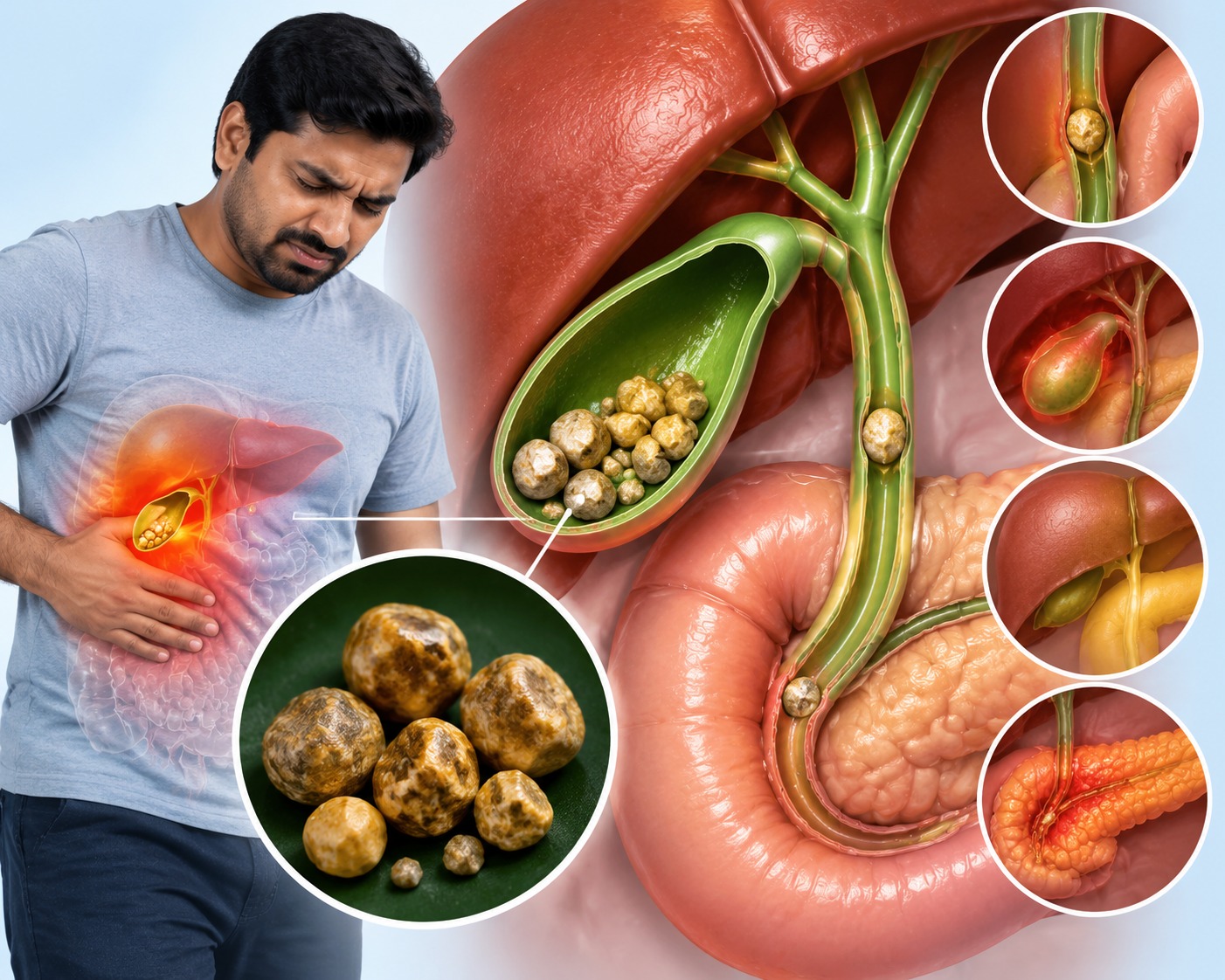
Stone type, together with size and position, decides which treatment route makes sense for you.
The most common type by far, formed when bile carries more cholesterol than it can dissolve. These are the stones most likely to respond to medication when they are still small.
Small, dark stones linked to liver disease or blood disorders. Finding them is a reason to assess the liver properly, not just the gallbladder.
A combination of cholesterol and calcium salts. Size and position usually matter more than composition when deciding on gallstone removal treatment in KPHB.
Symptoms usually appear after a heavy or oily meal. Some people feel nothing at all until a stone blocks the bile duct — which is why repeated pain episodes are worth investigating early.
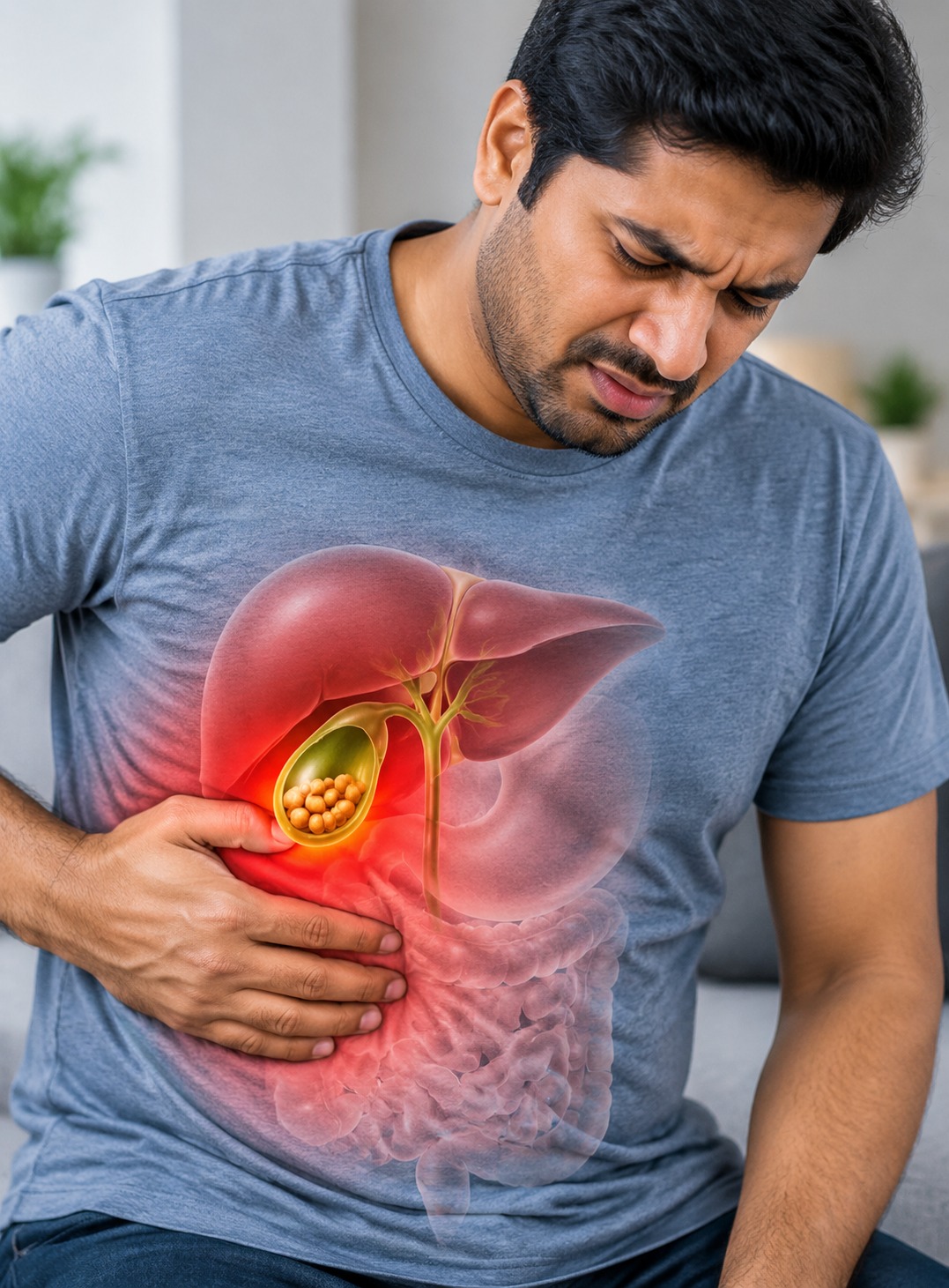
Sudden, gripping pain below the right ribs, often starting within an hour or two of a fatty meal.
The same episode felt between the shoulder blades or in the right shoulder tip.
Feeling sick during or after an attack, sometimes with repeated vomiting.
Persistent fullness, belching and discomfort that gets blamed on "gas" for months.
Jaundice suggests a stone has moved into the bile duct — this needs prompt assessment.
A sign the gallbladder or bile duct is infected. Do not wait this one out.
Bile carries cholesterol, bile salts and bilirubin from the liver. When that balance shifts, or the gallbladder empties poorly, bile concentrates and stones begin to form.
Excess weight raises cholesterol in bile; crash diets and very fast weight loss make the gallbladder empty less often. Both push stones along.
Deep-fried food, heavy dinners and very little fibre are a familiar pattern in patients we see across Kukatpally and KPHB.
Gallstones run in families. If a parent or sibling has had the gallbladder removed, your own risk is measurably higher.
Diabetes, high triglycerides and fatty liver frequently travel together with gallstones, and are assessed at the same visit.
Oestrogen increases cholesterol in bile and slows gallbladder emptying, which is why stones are more common in women.
Risk climbs steadily after 40, particularly in women. Age alone is not a reason for surgery, but it is a reason to take repeated pain seriously.
A fixed sequence, in this order — each step decides whether the next one is needed.
Your symptoms, meal pattern, weight history and family history. When the pain started, how long it lasts and what brings it on tells us a great deal before any test.
The primary tool for detecting gallstones. It confirms the number, size and position of the stones and shows whether the gallbladder wall is inflamed.
Blood tests that reveal whether a stone has slipped into the bile duct — the single most important thing to rule in or out before planning treatment.
Assesses liver stiffness and rules out coexisting liver disease. Done here, in the same visit, with no referral to another centre.
Reserved for complex cases or suspected duct stones. If your ultrasound answers the question, you will not be sent for either.
Treatment depends on stone size, symptoms and your overall health. Every option is explained in plain terms before anything is decided.
For stones that are small and silent, or where surgery carries a higher risk than the stones do. Treatment means a lower-fat diet, ursodeoxycholic acid to dissolve small cholesterol stones, and ultrasound review at set intervals. No downtime at all, and reviews continue for as long as the stones stay quiet.
Gallstone removal treatment in KPHB through keyhole surgery, chosen when stones cause recurring pain, infection or blockage. The gallbladder is removed through a few small incisions, so it typically means a day or two in hospital, with most patients back to normal activity within one to two weeks.
Used when a stone has travelled into the common bile duct, usually signalled by jaundice or abnormal liver tests. The stone is removed endoscopically through the mouth, with no open surgery and no external incision. ERCP is often followed by gallbladder removal later, once the duct is clear.
Dr. Viswanath Kamisetty holds MBBS, MD and DM in Medical Gastroenterology, and is the sole DM-qualified specialist treating patients at this KPHB clinic. His practice is limited to liver and digestive conditions alone.
Ultrasound findings, liver function results and a FibroScan assessment come together in a single visit — something few gastroenterology clinics in Hyderabad offer without a referral chain.
Consultations run into the evening on weekdays and through Sunday morning, so working patients and families in Kukatpally do not have to take a day off to be seen.
The same doctor sees you at consultation, reviews your scan and handles follow-up. On 13th Phase Road, minutes from KPHB Colony, JNTU, Nizampet, Bachupally and Miyapur.

Consultant Gastroenterologist & Liver Specialist, Advanced Interventional Endoscopist — Gokul Gastro & Liver Care, KPHB · Medicover Hospitals, Financial District.
Gallstone treatment works best when the diagnosis happens early and the plan matches your stones, not a template. Book with Dr. Viswanath Kamisetty and take the first step toward lasting digestive comfort.