Liver cancer treatment in KPHB is now available close to home at Gokul Gastro & Liver Care,
Kukatpally. Dr. Viswanath Kamisetty leads this unit as a DM-qualified liver specialist, and the
clinic runs evening hours and a Sunday OPD, so working families can consult without losing a
full workday. Because liver tumours often grow quietly, timely review changes outcomes.
Many patients reach us after an incidental scan finding; others arrive with fatigue, weight
loss, or long-standing hepatitis, and some come only for a second opinion. Whatever the route,
our approach stays the same: confirm the diagnosis, stage the disease properly, then build a
plan that suits your health and your budget.
Understanding liver cancer and why early care matters
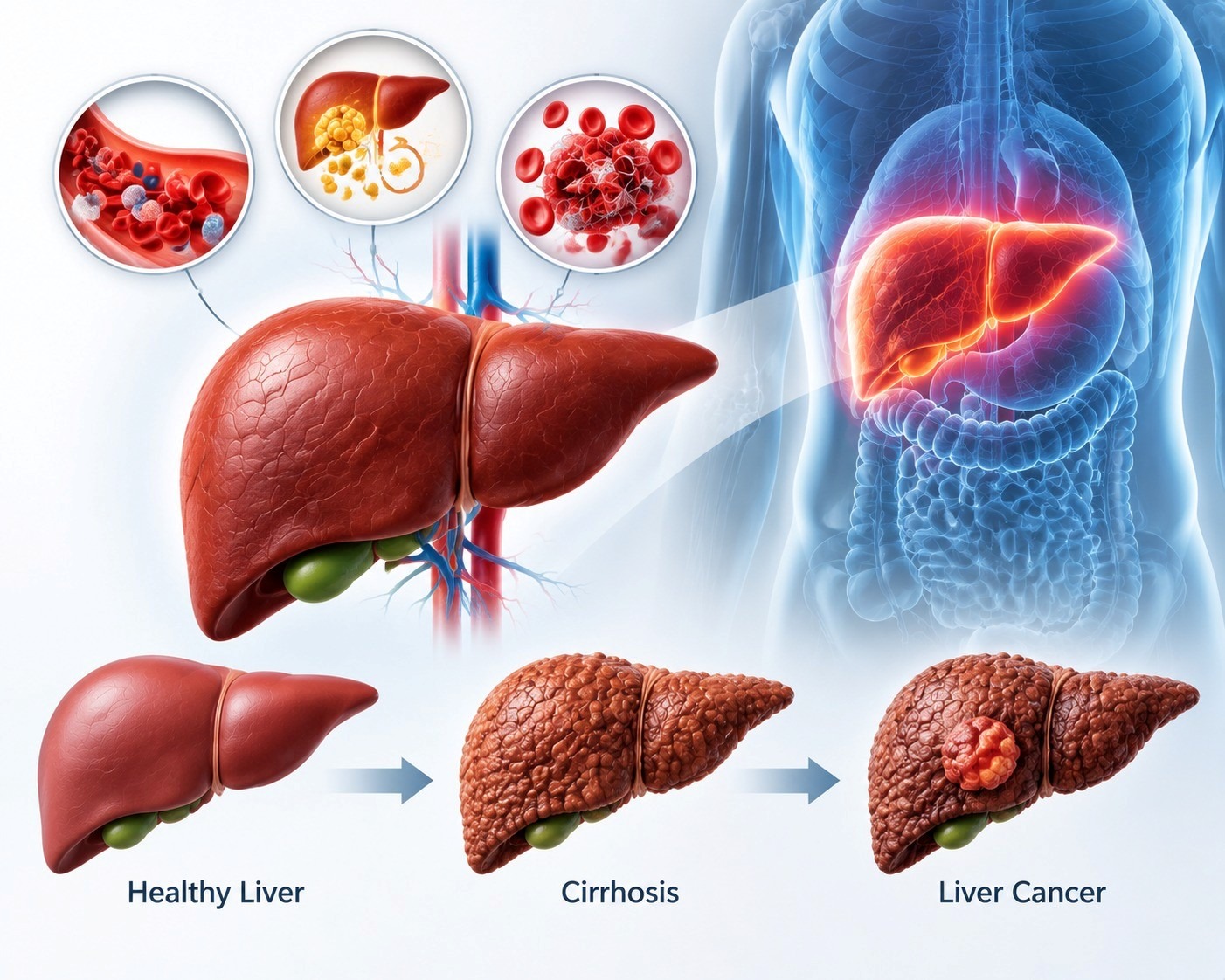
The liver filters blood, stores energy, and makes clotting proteins, so damage
here affects the whole body. Liver cancer begins when cells in this organ multiply abnormally,
and most cases develop against a background of long-standing liver injury.
Chronic inflammation slowly scars healthy liver tissue, and over years that scarring becomes
cirrhosis. Meanwhile, repeated cell repair raises the chance of mutation, and eventually one
nodule may turn cancerous — which is exactly why regular surveillance helps high-risk
patients so much.
Primary versus secondary liver tumours
Treatment differs sharply between these two groups, so accurate identification always comes before
therapy.
Primary liver tumours
Some tumours start inside the liver itself. Hepatocellular carcinoma, shortened to HCC, is the
commonest type — hepatocellular carcinoma treatment in KPHB follows a well-established
pathway, matched carefully to how the tumour and the liver behave.
Secondary liver tumours
In contrast, secondary tumours spread from elsewhere, often the colon or stomach. These need a
different approach entirely, usually built around the original cancer rather than the liver
alone.
Symptoms
Signs that should prompt a liver specialist consultation
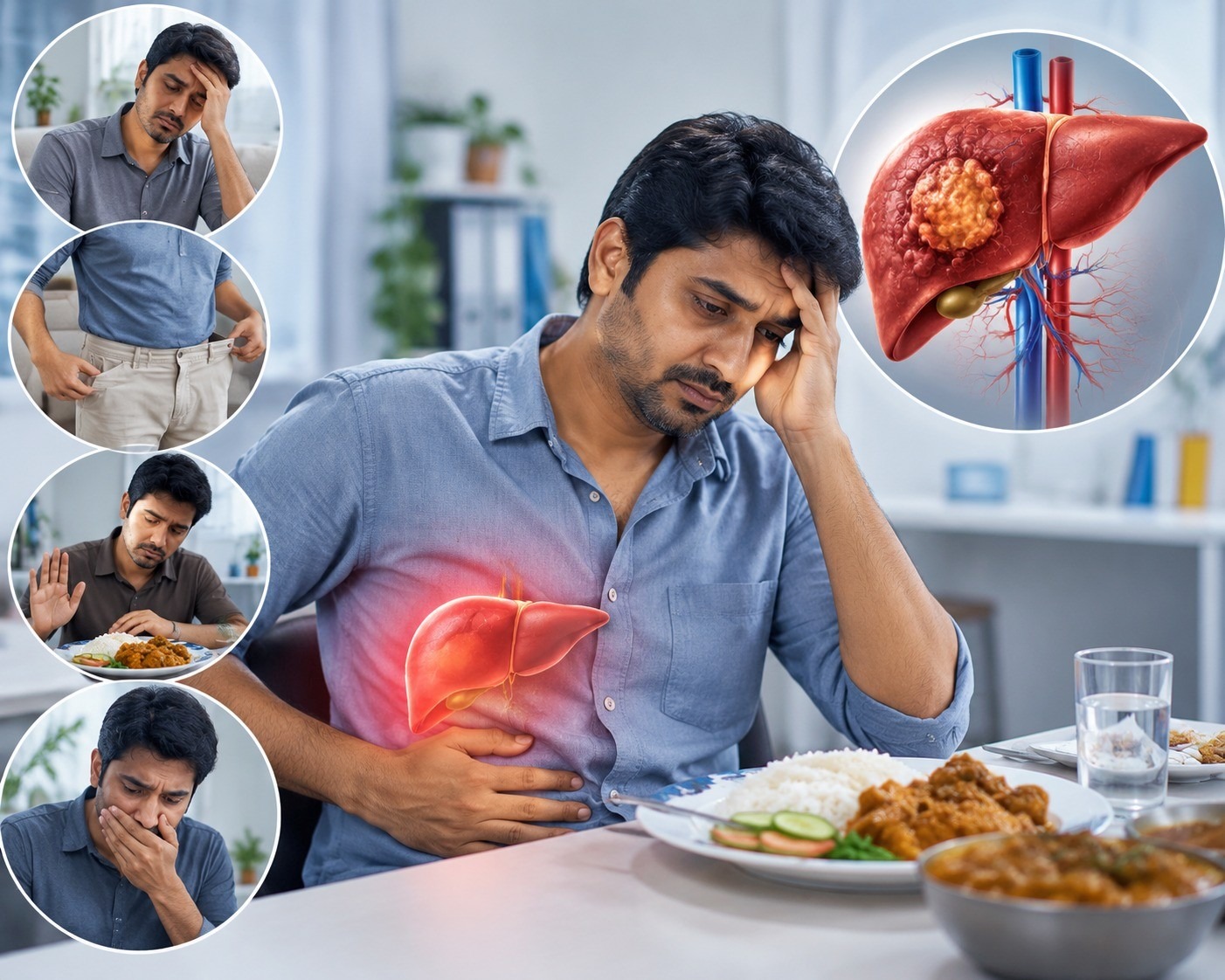
Early liver cancer rarely causes dramatic symptoms. Small changes often appear well before
diagnosis, and noticing them early gives you far more treatment choices.
Persistent tiredness
Tops the list of early signals people often miss.
Drop in appetite
Eating less than usual, without any clear reason why.
Clothes feeling loose
Unintentional weight loss that sneaks up gradually.
Dull ache below the right ribs
A heaviness rather than sharp pain, easy to dismiss.
Nausea after oily meals
Queasiness that shows up specifically after heavier food.
>
Advanced disease speaks louder: yellowing of the eyes suggests trouble with bile flow, swelling of
the abdomen points to fluid build-up, dark urine and pale stools may follow, and easy bruising
indicates falling clotting function. Any hepatologist in KPHB would review these findings
promptly.
Risk Factors
Common risk factors behind liver cancer
Most cases develop against a background of long-standing liver injury, and these are the drivers we
check for first.
Chronic hepatitis B
Long-standing hepatitis B infection is one of the strongest known drivers of liver
cancer.
Chronic hepatitis C
Long-standing hepatitis C infection carries the same risk, even years after the virus feels
forgotten.
Fatty liver disease
Linked to diabetes or obesity, fatty liver now drives a growing share of cases seen in the
clinic.
Regular alcohol use
Years of regular drinking scars the liver steadily, raising risk alongside any other driver
present.
Cirrhosis, from any cause
Whatever caused the scarring, established cirrhosis itself raises the background risk of a
nodule turning cancerous.
Family history
A strong family history of liver disease is worth mentioning at your first visit, even
without symptoms of your own.
>
Diagnosis
Liver cancer diagnosis in KPHB — a clear pathway
Accurate diagnosis decides everything that follows. You will know each test, its purpose, and its
cost beforehand.
1
Clinical review and blood work
A detailed history and careful abdominal exam, followed by blood tests assessing liver
function, hepatitis status and clotting — alpha-fetoprotein, a useful tumour
marker, is often added here too.
2
Ultrasound and on-site FibroScan
Ultrasound usually comes first, since it's quick and safe. Our on-site FibroScan measures
liver stiffness painlessly alongside it.
3
Triple-phase CT or MRI
Follows whenever a nodule appears. HCC shows a typical pattern on these scans, which is
why many patients avoid an unnecessary biopsy.
4
Staging with the BCLC system
Staging tells us how far the disease has travelled and guides whether cure remains
realistic. We follow the BCLC system, which is standard worldwide.
5
Biopsy, only when required
Reserved for genuinely unclear cases, so needless procedures are avoided wherever
imaging already answers the question.
Treatment
Liver cancer treatment in KPHB — options we discuss with
you
Treatment depends on tumour size, liver function, and overall fitness. We grade liver function
using the Child-Pugh score, count and measure every tumour, and assess your daily activity level
before suggesting a route — matching the option to the person, not merely the scan.
Surgical resection
Removes the tumour with a safe margin. Chosen when a single tumour sits in a well-preserved
liver.
Liver transplantation
Replaces the diseased organ altogether. Chosen when tumours stay small and few, yet
cirrhosis is advanced.
Ablation
Destroys small tumours using heat or alcohol. Chosen when nodules measure under three
centimetres.
Locoregional therapy
TACE delivers chemotherapy straight into the tumour's blood supply, chosen when several
tumours remain confined within the liver. TARE uses tiny radioactive beads instead, chosen
when TACE suits poorly or the tumour sits near major vessels.
Systemic therapy
Targeted tablets and immunotherapy act throughout the body. Chosen when disease has spread
beyond the liver.
Supportive care
Controls pain, fluid, and appetite. Chosen when comfort and quality of life take
priority.
>
HCC treatment in KPHB rarely means one single procedure. Instead, it usually combines several steps
over time — ablation may follow a course of TACE, and surgery sometimes needs medical therapy
afterwards. Because plans evolve, steady follow-up stays essential.
Dr. Viswanath Kamisetty
MBBS · MD · DM (Medical Gastroenterology)
Consultant Medical Gastroenterologist & Hepatologist —
Gokul Gastro & Liver Care, KPHB · Medicover Hospitals, Financial District.
13+ years experience20,000+ patients5.0★ rated
Meet your liver cancer doctor in KPHB
Dr. Viswanath Kamisetty holds MBBS, MD, and DM in Medical Gastroenterology. His training covers
liver disease, endoscopy, and digestive disorders, and he has guided many families through
hepatitis, cirrhosis, and tumour care. As your liver cancer specialist in KPHB, he explains
options without heavy jargon, so patients feel genuinely involved in each decision. Patients
seeking liver cancer treatment in Hyderabad also reach us easily — our clinic sits in
KPHB 13th Phase, close to the metro corridor.
One DM-qualified specialist reviews you at every single visit
Coordinated referrals for surgery, transplant, and oncology
Book your liver cancer consultation in KPHB today.
Liver cancer treatment in KPHB works best when it starts early and stays organised. Our clinic
combines DM-level expertise with on-site FibroScan and flexible timings, and we explain every
report in simple words — because each liver behaves differently, your plan will be built
around you.
Yes, early tumours often respond very well. Surgery, ablation, or transplant may offer a cure,
which is exactly why surveillance matters greatly for high-risk patients.
How long does liver cancer diagnosis usually take?
Most patients complete blood tests and ultrasound within one day. CT or MRI takes another two
days, so a clear plan usually emerges within a week.
Does hepatitis B always lead to liver cancer?
No, it certainly does not. Untreated hepatitis B raises the risk considerably, but regular
monitoring and antiviral therapy lower that risk sharply.
Can I consult a liver cancer specialist in KPHB on a Sunday?
Yes, our Sunday OPD runs every week, and evening slots help patients who work on weekdays.
Is FibroScan painful?
Not at all, since the scan uses gentle sound waves. It takes roughly ten minutes, and no
needles or injections are involved.
Do I need a biopsy for HCC?
Often you do not. Typical scan patterns usually confirm HCC, though a biopsy helps when imaging
stays unclear.