Subtotal $0.00
Pancreatic ductal adenocarcinoma
The commonest type, arising from the duct lining. This is what most people mean when they say "pancreatic cancer."

Specialist gastroenterology, liver and pancreas care in KPHB Colony, Kukatpally. Sunday OPD, evening hours and on-site FibroScan.
Pancreatic cancer treatment in KPHB begins with an accurate diagnosis, and Gokul Gastro & Liver Care delivers exactly that. The pancreas sits deep in the abdomen, tucked behind the stomach, so early tumours rarely cause obvious trouble — the first symptoms often resemble simple gastritis or gallbladder pain, which is why many families reach a specialist much later than they should.
Dr. Viswanath Kamisetty assesses pancreatic disease personally at our Kukatpally clinic. He holds a DM in Medical Gastroenterology, the highest qualification in this field in India, and performs the endoscopic procedures himself — your reports don't travel through several unfamiliar hands. You receive one clear plan from one accountable doctor.
Monday – Saturday
Sunday
The pancreas is a small gland with two large jobs. It releases enzymes that break down fat and protein, and it produces insulin, which controls your blood sugar — so any tumour here can disturb both digestion and sugar levels together.
Not every growth in the pancreas behaves the same way, and each type demands a different plan. Tissue confirmation always comes before any treatment decision, which is exactly why the diagnostic pathway matters as much as the treatment itself.
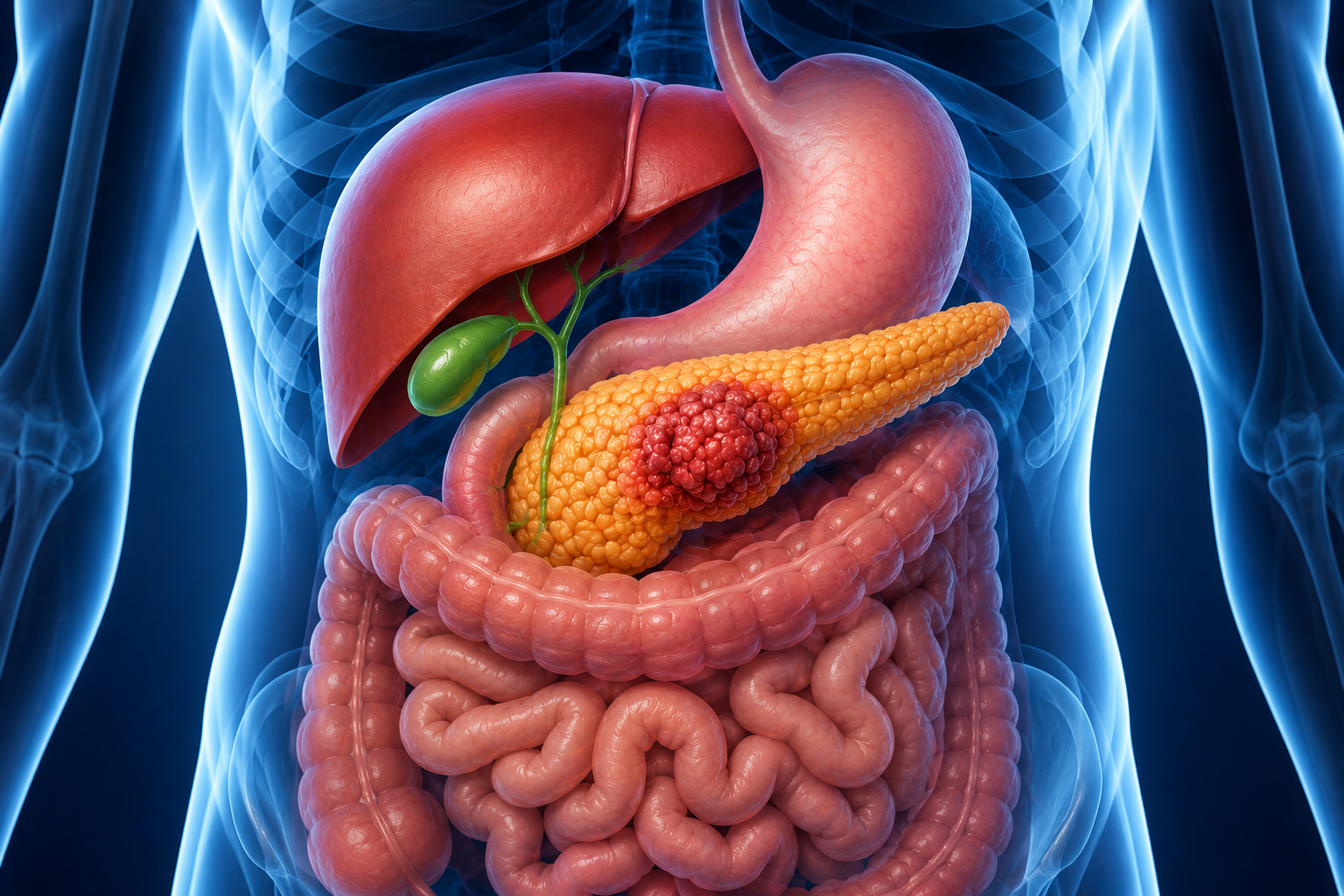
Doctors group them broadly into four families, and which one you have decides the entire approach.
The commonest type, arising from the duct lining. This is what most people mean when they say "pancreatic cancer."
Slower growing, and often far more treatable than other pancreatic tumours — outlook here is genuinely more favourable in many cases.
Fluid-filled lesions that sometimes turn cancerous over time, which is why they need proper typing rather than a quick glance.
Growths near the bile duct opening, often presenting earlier with jaundice because of where they sit.
Early signs stay vague, which explains the usual delay. Watch for these changes.
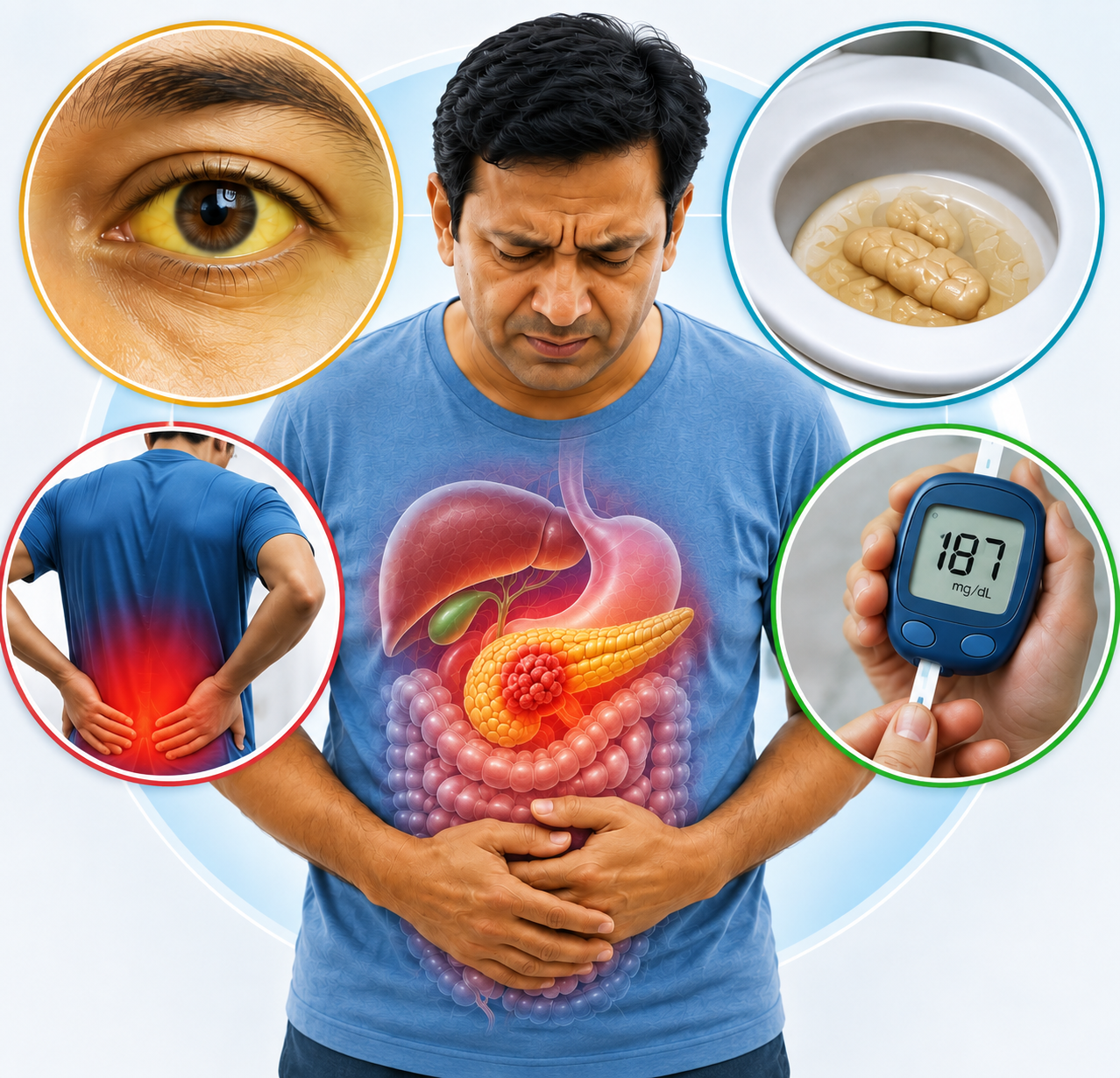
Jaundice, often the sign that finally brings people in for a review.
A boring, persistent ache rather than a sharp one.
A steady drop, without any deliberate change in diet.
Float and smell strongly — a sign fat isn't being digested properly.
Diabetes that appears suddenly, without the usual build-up, deserves a closer look.
Advanced disease produces firmer clues: deep fatigue, persistent nausea and dark urine, itching over the whole body following bile duct blockage, swelling in one leg, or upper abdominal pain that worsens on lying flat. Any of these patterns deserves a prompt specialist opinion.
No single cause explains pancreatic cancer, but research links several factors to higher rates.
The strongest modifiable factor in Indian patients, ahead of every other cause on this list.
Repeated inflammation damages duct cells over years, raising risk steadily.
A common route into chronic pancreatitis, and from there, higher risk.
A first-degree relative raises your baseline risk, and is worth mentioning at your first visit.
Both correlate with increased incidence, often alongside other metabolic risk factors.
Most diagnoses occur in this group, though younger patients are not exempt.
Importantly, many patients carry none of these factors. Unexplained jaundice or weight loss still warrants a proper workup, regardless of how low-risk you feel on paper.
Accurate staging changes everything about treatment, so our diagnosis pathway follows a strict sequence rather than ordering every test at once.
Liver function tests, blood counts and blood sugar come first, alongside the CA 19-9 marker, which tracks disease activity but never confirms cancer on its own.
Usually the first imaging step, mapping the tumour and its neighbouring vessels.
Clarifies the bile and pancreatic ducts. A PET-CT is added occasionally when doctors suspect spread elsewhere.
Places a probe millimetres from the pancreas, detecting lesions a CT scan can easily miss, and allows a fine-needle biopsy in the same sitting.
Relieves a blocked bile duct where needed, with relief usually following within a few days — and normalised bilirubin lets chemotherapy start safely.
Treatment depends entirely on stage, fitness and tumour type. Our clinic covers diagnosis, staging, stenting and supportive care directly; surgery, chemotherapy and radiotherapy happen at partner centres, with Dr. Kamisetty staying involved throughout — reviewing reports, adjusting enzyme doses and managing nutrition between cycles.
Chosen when jaundice blocks the bile duct and needs quick relief.
Enzyme replacement is chosen when fat malabsorption causes greasy stools and weight loss; broader nutritional and pain management is chosen when appetite, weight or comfort limits daily life.
Chosen when imaging shows a resectable tumour in a fit patient. Whipple's procedure is the standard operation for tumours in the head of the pancreas.
Chosen when the tumour is borderline, locally advanced or metastatic.
Chosen when a locally advanced tumour needs added local control.
Chosen when severe back pain persists despite medication, offering targeted relief.

Consultant Medical Gastroenterologist & Hepatologist — Gokul Gastro & Liver Care, KPHB · Medicover Hospitals, Financial District.
Dr. Viswanath Kamisetty completed MBBS, then MD in General Medicine, followed by DM in Medical Gastroenterology. His practice covers diagnostic and therapeutic endoscopy, including EUS and ERCP, and besides pancreatic disease, he treats liver, biliary and intestinal conditions daily. As a pancreas specialist in KPHB, he prioritises clarity over jargon — patients leave each consultation knowing the next step and its purpose, and families receive written guidance for home care. Treatment works best as team medicine, and this clinic coordinates those conversations for you: surgeons, oncologists and gastroenterologists agree on sequence and timing, imaging and biopsy reports are shared directly with the treating team, and families avoid repeating scans at every new hospital.
Early assessment genuinely changes outcomes in pancreatic disease. Never dismiss vague symptoms as ordinary acidity — unexplained jaundice, back pain or weight loss deserves a specialist review. Please carry previous scans, blood reports and current medicines, so your first visit becomes far more productive.