
Specialist gastroenterology, liver and pancreas care in KPHB Colony, Kukatpally. Sunday OPD, evening hours and on-site FibroScan.

Shopping cart

Subtotal $0.00

View cartCheckout

Ascites & Fluid Drainage

Ascitic Fluid Paracentesis in KPHB

Ascitic fluid paracentesis in KPHB gives fast relief when fluid collects inside the abdomen. Dr. Viswanath Kamisetty performs this day-care procedure at Gokul Gastro & Liver Care, Kukatpally, and the clinic keeps a FibroScan on site, so liver testing happens during the same visit — patients avoid running between separate diagnostic centres across the city.

Abdominal swelling rarely appears on its own. Usually, it signals a liver, heart or kidney problem underneath, so a specialist must find the cause while draining the fluid. This page explains the procedure, the tests involved and the follow-up care.

Waistline expanding, or breathless on the stairs? Get the fluid drained and the cause found this week.

Monday – Saturday

  • OPD7:30 AM – 9:00 PM

Sunday

  • OPD10:00 AM – 1:00 PM
5.0★
Google rating
20,000+
Patients treated
13+ yrs
Clinical experience
DM
Medical Gastroenterology
Overview

What is ascitic fluid paracentesis?

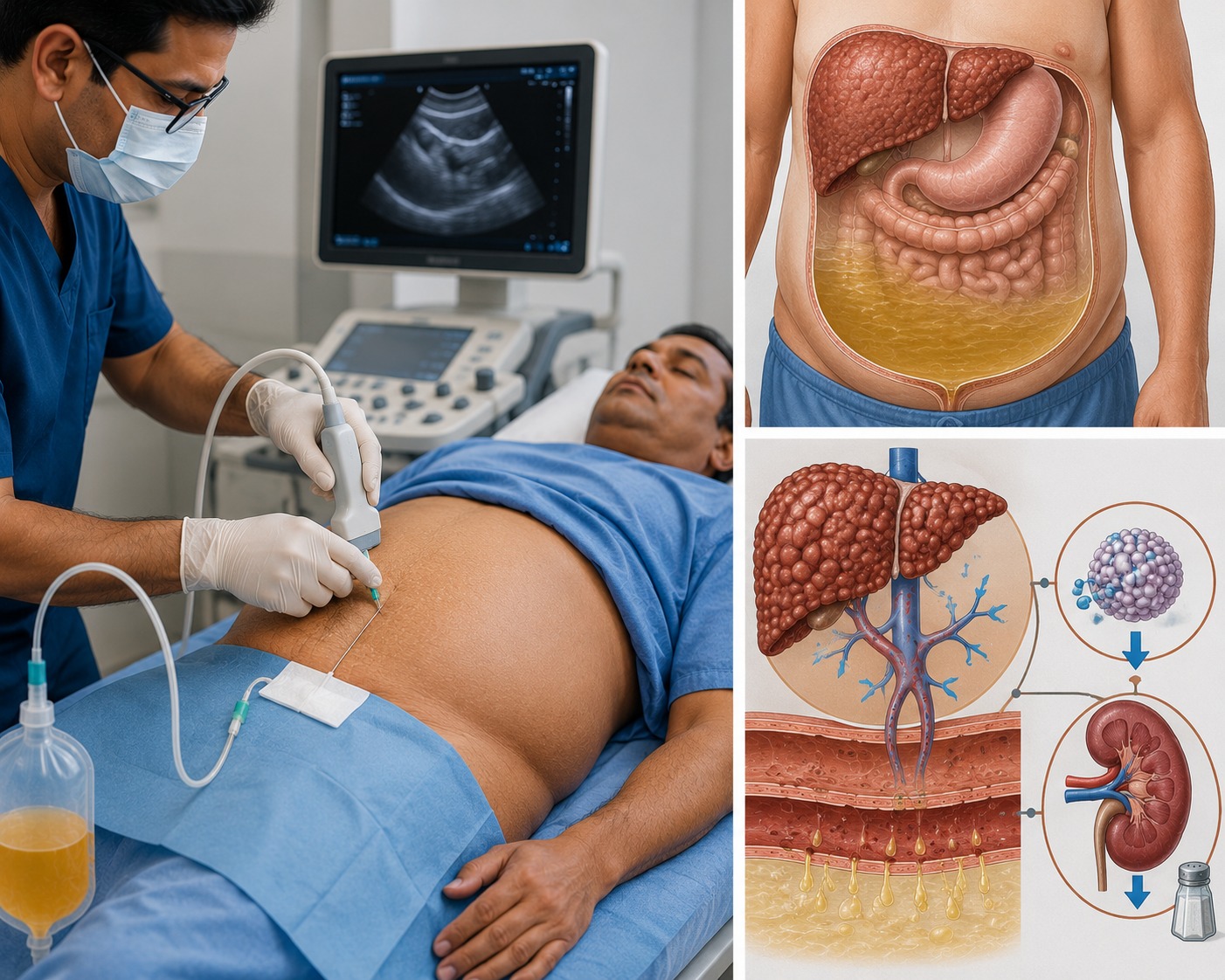
Paracentesis means drawing fluid out of the abdominal cavity through a fine needle. Doctors call this collected fluid ascites, and the tap itself takes only a few minutes. Ultrasound guidance marks the safest spot before the needle goes in, local anaesthetic numbs the skin, fluid then drains into a bag or a syringe, and a small dressing covers the site afterwards.

Scarred liver tissue raises pressure inside the portal vein, and fluid leaks from blood vessels into the abdominal space as a result. Low albumin worsens that leak, because albumin normally holds fluid within vessels, and salt retention by the kidneys adds further load.

Ascitic fluid paracentesis at Gokul Gastro & Liver Care, KPHB, Kukatpally

Diagnostic tap versus therapeutic tap

Both procedures share the same technique, but the purpose differs completely.

Diagnostic paracentesis

The doctor removes a small sample only — around 20 to 50 millilitres usually suffices. Laboratory analysis then reveals the cause and rules out infection, checking cell count with neutrophil percentage, albumin and total protein levels, culture for bacterial growth, and cytology when cancer seems likely.

Therapeutic paracentesis

Large-volume drainage removes several litres at one sitting, so breathlessness settles quickly and appetite returns. Albumin infusion follows whenever the volume crosses five litres, to protect kidney function.

Symptoms

Signs that point towards ascites

Fluid build-up develops slowly, so early signs stay subtle. Still, a few patterns repeat often.

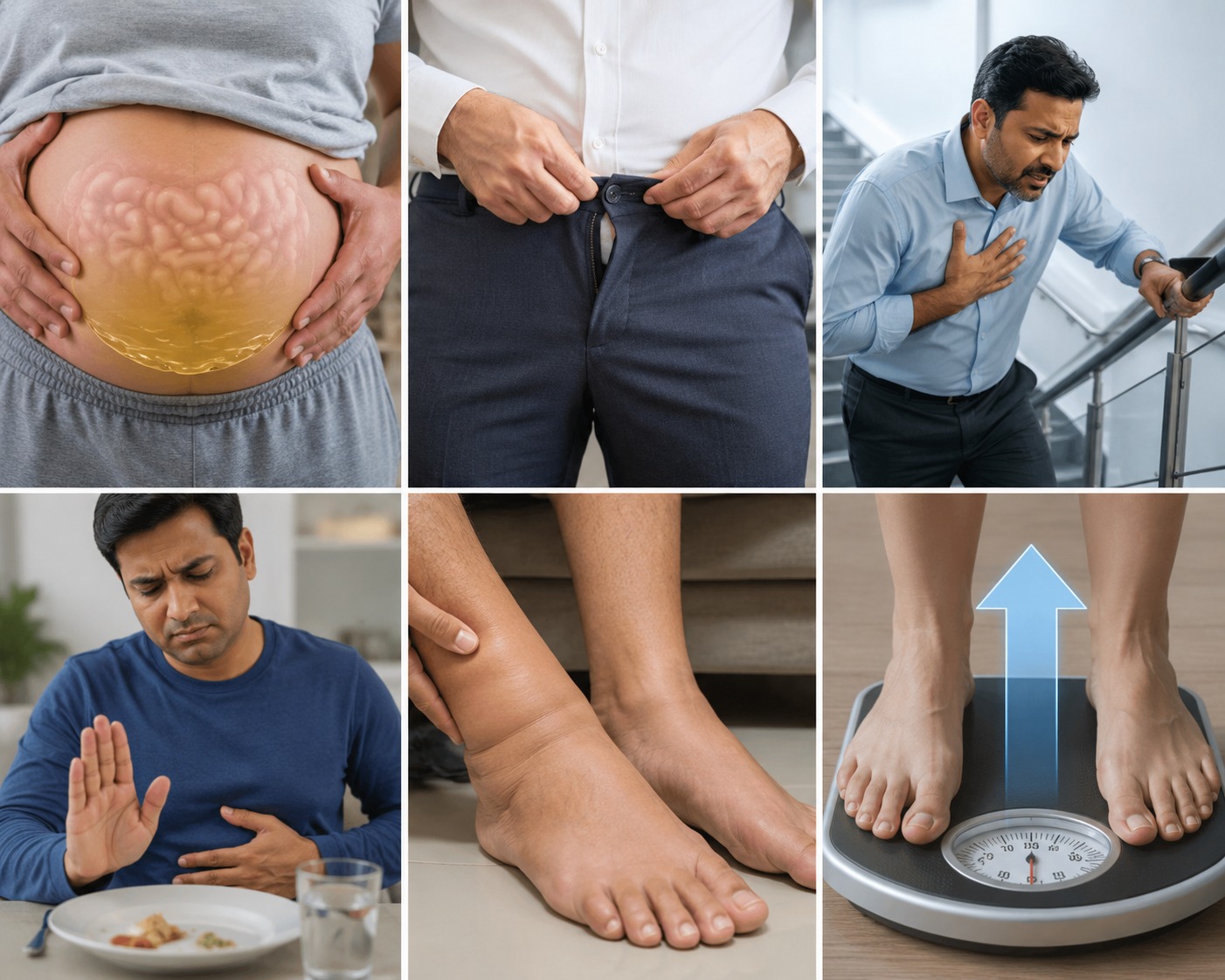
Waistline expanding although body weight feels unchanged, a sign of ascites
  • Waistline expands

    Grows even though body weight feels unchanged on the scale.

  • Clothes feel tight

    Trousers and saree pleats grow tight within just a few weeks.

  • Breathlessness on stairs

    Appears after climbing just a single flight, where it never used to.

  • Fullness after a few bites

    Starts surprisingly early into a meal, well before the plate is finished.

  • Ankles swell by evening

    Puff up through the day and settle back down overnight.

  • Rapid weight gain

    Rises by more than two kilograms in a single week — fluid, not fat.

>

Any of these changes deserves a review. Jaundice or confusion alongside swelling calls for a same-week consultation, not a wait-and-watch approach.

Causes

Conditions behind ascites

A liver specialist for ascites always looks past the swelling itself — the workup covers several organ systems at once.

Cirrhosis and portal vein disorders

Cirrhosis explains roughly eight in ten cases across India, led by alcohol, hepatitis B, hepatitis C and fatty liver disease. Portal vein thrombosis and Budd-Chiari syndrome account for a smaller share.

Heart failure

Pushes pressure backwards into the abdominal veins, driving fluid out the same way liver disease does.

Kidney disease and low protein

Kidney disease and low protein levels allow fluid to escape from the vessels, similarly to low albumin.

Abdominal tuberculosis

Stays common across our region, and remains a key reason diagnostic sampling matters before assuming a liver cause.

Ovarian and GI cancers

Can seed the peritoneum directly, which is why cytology gets checked when cancer seems likely.

>
The Procedure

How the procedure works, step by step

Paracentesis treatment in KPHB follows a fixed sequence at our clinic, so patients know exactly what to expect at every stage.

1

Consultation and confirmation

Percussion and ultrasound confirm the fluid is really there before anything else happens.

2

Blood tests and consent

Haemoglobin, platelets, INR, creatinine and albumin are checked, then consent and positioning follow, with a slight tilt towards your left side.

3

Site marking and anaesthesia

Ultrasound identifies a fluid pocket clear of bowel and vessels, and local anaesthesia numbs the skin and the deeper layers.

4

Drainage

A fine catheter goes in through the marked point, and drainage continues steadily while the nurse monitors your pulse.

5

Recovery and discharge

Dressing and rest take thirty to sixty minutes. Albumin cover protects kidney function after larger drains, and discharge advice covers diet, diuretic doses and review dates.

Treatment

Treatment options for ascites

Ascites treatment in KPHB depends on the underlying cause and the fluid volume. Ascites drainage in KPHB rarely works as a standalone answer — instead, it buys comfort while the real cause receives proper treatment.

Salt restriction with diuretics

Chosen when fluid stays mild to moderate and kidney function remains stable.

Diagnostic paracentesis

Chosen when ascites appears for the first time, or infection looks likely.

Large-volume and repeated taps

Chosen when the abdomen turns tense and breathing becomes difficult, or when diuretics stop working despite correct dosing.

TIPS referral

Chosen when refractory ascites persists and liver reserve still permits a shunt.

Root-cause therapy

Chosen when hepatitis, alcohol, tuberculosis or heart failure drives the fluid.

Transplant assessment

Chosen when liver failure advances and other measures fall short.

>
Dr. Viswanath Kamisetty, performing ascitic fluid paracentesis in KPHB, Kukatpally

Dr. Viswanath Kamisetty

MBBS · MD · DM (Medical Gastroenterology)

Consultant Gastroenterologist & Hepatologist — Gokul Gastro & Liver Care, KPHB · Medicover Hospitals, Financial District.

13+ years experience 20,000+ patients 5.0★ rated

Meet your doctor

Dr. Viswanath Kamisetty holds MBBS, MD and DM in Medical Gastroenterology. He treats liver disease, portal hypertension and complex digestive problems, and performs each diagnostic and therapeutic tap personally — families across Kukatpally want an ascites specialist in KPHB who handles both the tap and the cause, and this clinic covers both sides together.

  • Single DM-qualified specialist sees you at every visit
  • On-site FibroScan brings liver stiffness readings into the same appointment
  • Ultrasound-guided technique lowers the chance of a dry tap
  • Sunday OPD and evening hours suit working patients

Book your appointment for ascitic fluid paracentesis in KPHB.

Ascites signals a deeper problem, so drainage alone never completes the treatment. This procedure relieves pressure quickly and reveals the cause behind it, while diet, medication and targeted therapy keep the fluid from returning. Carry your previous scans, discharge summaries and current medicine lists, so the doctor plans your tap without repeating settled tests.

FAQs

Ascitic fluid paracentesis — common questions

Is ascitic fluid paracentesis in KPHB painful?
No, the procedure causes very little discomfort. Local anaesthesia numbs the area beforehand, and most patients report only a brief pressure sensation.
How long does the procedure take?
A diagnostic tap finishes within ten minutes. Large-volume drainage may run for one to three hours, depending on how much fluid needs to come out.
How much fluid can doctors remove safely?
Four to six litres often come out in one sitting. Beyond five litres, albumin infusion protects kidney function.
Will the fluid come back?
Yes, fluid returns whenever the cause remains untreated. Diuretics, salt control and specific therapy continue alongside the tap to slow that return.
Do I need hospital admission?
No, most taps happen as day-care visits. Unstable patients may need overnight observation, but that's the exception rather than the rule.
Is paracentesis for ascites risky?
Serious complications stay uncommon. Ultrasound guidance further lowers the risk of bleeding or bowel injury.
Can I eat before the procedure?
Yes, fasting is not necessary. Still, a light meal suits most patients better than a heavy one.
What does abdominal fluid removal in KPHB cost?
Charges depend on fluid volume, laboratory tests and albumin requirement. Our team shares a clear estimate before you proceed.
How soon will I feel better?
Relief usually begins immediately after drainage. Breathing eases and appetite improves within a few hours.
Call Now Button