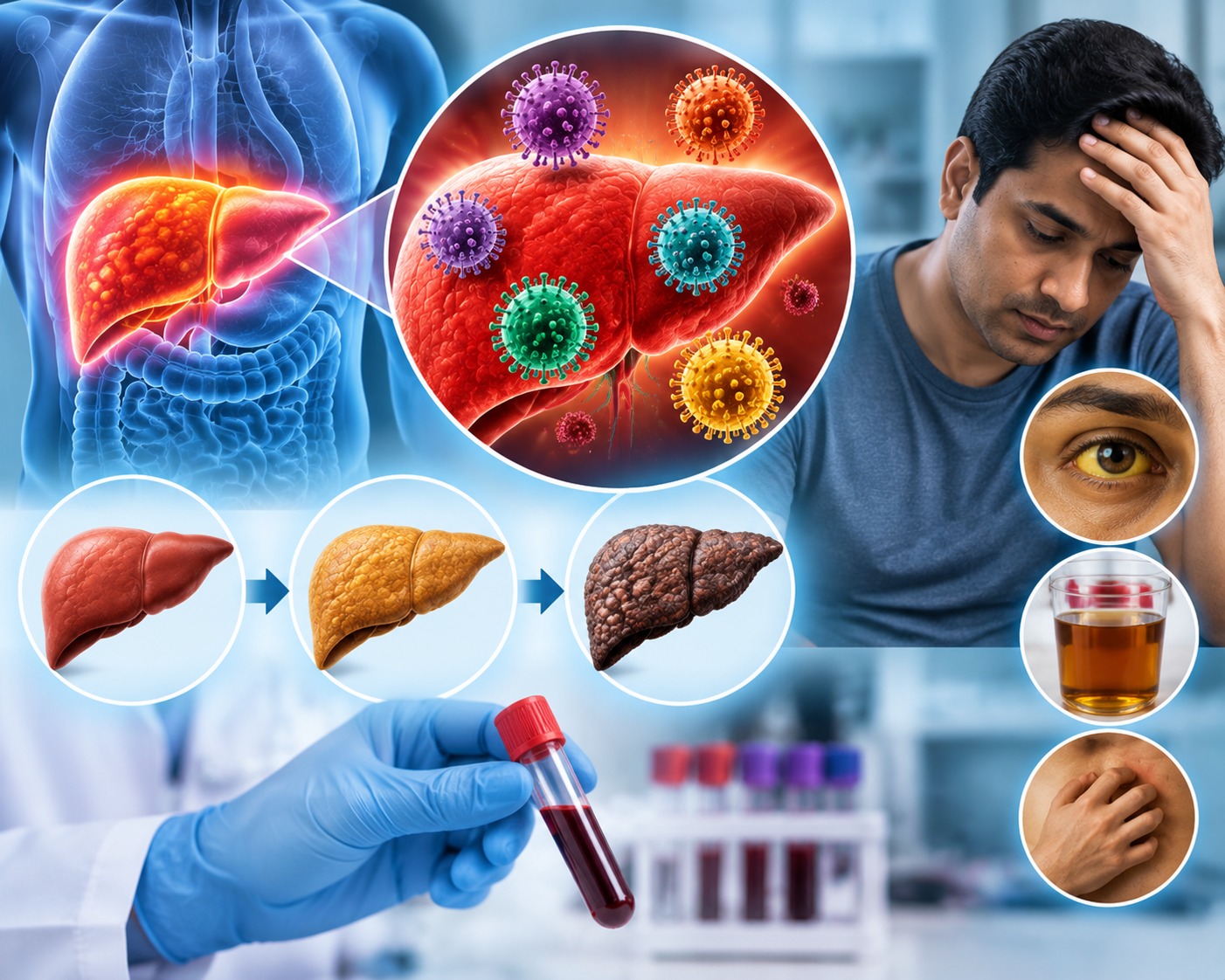
Viral hepatitis treatment in KPHB begins with an accurate diagnosis at Gokul Gastro &
Liver Care, Kukatpally. Dr. Viswanath Kamisetty is a DM-qualified medical gastroenterologist
and hepatologist who manages hepatitis A, B, C, D and E under one roof, so you avoid running
between a physician, a scan centre and a liver specialist in KPHB.
The clinic also runs Sunday OPD and evening consultation hours, so working families reach the
doctor without losing a day's wages — and treatment here follows current national and
global guidelines.
Viral hepatitis means inflammation of the liver caused by a specific virus.
Five viruses cause most infections across India, and each one spreads differently and needs a
different plan. Some infections settle quietly within a few weeks; others damage the liver
slowly for many years — which is exactly why early testing matters far more than
symptoms alone. Good viral hepatitis treatment in KPHB therefore starts with the right test,
never with guesswork.
The liver filters blood, stores energy and clears toxins every single day. When a virus
enters, immune cells rush in and swelling follows — liver enzymes rise and bilirubin
builds up in the blood, and jaundice, dark urine and constant tiredness then appear.
Long-standing inflammation replaces healthy tissue with stiff scar tissue, a process doctors
call fibrosis. Timely treatment can stop it early.
Types of viral hepatitis treated at our KPHB clinic
Each virus behaves differently, so knowing exactly which one you have decides the entire plan.
Hepatitis A
Spreads through contaminated water and roadside food. Usually causes a short illness
with fever, nausea and yellow eyes, and most people recover fully within four to
six weeks. Besides rest and fluids, no antiviral medicine helps here — but
a doctor should still confirm the diagnosis before you assume it's mild.
Hepatitis B
Travels through blood, unsafe injections, unprotected sex and childbirth. Sometimes
the body clears it on its own, but in many adults the infection stays for life,
raising the risk of cirrhosis and liver cancer. Hepatitis B treatment in KPHB
focuses on lifelong suppression — regular viral load testing and daily
antiviral tablets keep it under control, on a clear, monitored schedule.
Hepatitis C
Also spreads through infected blood and shared needles. Earlier, this infection was
hard to cure — today, direct-acting antiviral tablets cure more than 95
out of 100 patients, and the course usually runs for only eight to twelve weeks
with mild side effects for most people. Ask about hepatitis C treatment in
Kukatpally during your first consultation.
Hepatitis D and E
Only people who already carry hepatitis B can catch hepatitis D, so controlling
hepatitis B protects against both. Hepatitis E spreads through unclean water,
much like hepatitis A — pregnant women need closer monitoring, because
this infection can turn serious for them.
Symptoms
Symptoms that point towards viral hepatitis
Jaundice treatment in KPHB often begins the day these signs appear. Watch for the following.
Yellow eyes or yellow skin
Jaundice, usually the sign that brings people in.
Dark yellow urine with pale stools
A clear signal that bile isn't draining as it should.
Constant tiredness
Fatigue that persists even after a full night of rest.
Loss of appetite and nausea
Especially noticeable after meals.
Mild fever with body pain
Often mistaken for a general viral illness.
Dull ache below the right ribs
A heaviness rather than sharp pain.
>
Chronic hepatitis often hides for years without a single complaint. Later, swelling in the legs or
abdomen may appear, along with easy bruising, itching and confusion — because of this
silence, screening beats waiting for symptoms. Anyone with a family history should test once, even
while feeling perfectly healthy.
Causes
How viral hepatitis spreads
Transmission depends entirely on the virus involved.
Water and food
Contaminated drinking water or unwashed food spreads hepatitis A and E.
Needles and equipment
Reused needles and unsterile equipment carry hepatitis B, C and D.
Blood transfusion
Unscreened blood transfusion passes on hepatitis B and C.
Sexual contact
Unprotected sexual contact transmits hepatitis B.
Mother-to-baby
Mother-to-baby spread during delivery mainly involves hepatitis B.
Razors, blades and tattoo needles
Shared razors, blades and tattoo needles carry hepatitis B and C.
>
Hepatitis does not spread through hugging, sharing meals or mosquito bites. Such myths often delay
care and cause needless fear at home — which is why treatment here always begins with clear
counselling for the whole family.
Diagnosis
Diagnosis before viral hepatitis treatment in KPHB
Accurate testing shapes every decision that follows, so our Kukatpally clinic completes the full
workup in one place.
1
Liver function test
A liver function test in KPHB is the usual starting point, checking enzymes and
bilirubin to confirm how much the liver is affected.
2
Hepatitis screening
HBsAg and anti-HCV for hepatitis B and C, plus anti-HAV IgM and anti-HEV IgM where an
acute infection is suspected — together these confirm which virus is involved.
3
Viral load testing
HBV DNA and HCV RNA measure how active the infection is, alongside a complete blood
count with a clotting profile.
4
FibroScan on site
Blood reports alone cannot show liver stiffness. A FibroScan test in KPHB fills that
gap, measuring stiffness painlessly in under ten minutes.
5
Ultrasound abdomen
Checks liver size, texture and any growths, completing the picture alongside the blood
work and FibroScan.
Treatment
Viral hepatitis treatment options in KPHB
Every liver behaves differently, so treatment here is never one-size-fits-all. Each option below
lists the situation where it gets chosen.
Supportive care for acute infection
Chosen when hepatitis A or E causes a fresh, self-limiting illness. Rest,
fluids and a light diet form the core of care, and the doctor stops any
medicine that strains the liver — weekly bilirubin checks then
track recovery. Treatment stays simple and supportive at this stage.
Antiviral tablets for chronic hepatitis B
Chosen when viral load stays high or liver enzymes remain raised. Tenofovir
and entecavir suppress the virus effectively, taken once daily with very
few side effects. Treatment often continues for years, so follow-up
remains essential — this means a long partnership with your
doctor.
Direct-acting antivirals for hepatitis C
Chosen when HCV RNA confirms an active hepatitis C infection. Sofosbuvir-
based combinations clear the virus in most patients, typically over
eight to twelve weeks, with a repeat RNA test twelve weeks later
confirming the cure.
Care for advanced liver disease
Chosen when scarring has already progressed towards cirrhosis. Treatment
widens here to include endoscopy for varices, and the doctor screens for
liver cancer every six months.
Long-term monitoring
Chosen when the infection stays controlled but not fully cleared. Chronic
hepatitis treatment in Hyderabad works only with steady follow-up
— regular reviews catch problems long before symptoms return, so
monitoring protects the liver as much as medicine does.
Dr. Kamisetty holds an MBBS, MD and DM in Medical Gastroenterology and treats liver, stomach and
intestinal conditions at KPHB 13th Phase, Kukatpally. His practice covers viral hepatitis, fatty
liver, cirrhosis and therapeutic endoscopy — as a hepatologist in Kukatpally, he sees
hepatitis cases every single day, and every case stays under his direct supervision. Patients
value his plain explanations and steady follow-up; above all, he reads each report as part of a
person, not a number. Patients searching for the best gastroenterologist in KPHB often value
exactly this simplicity.
A single DM-qualified specialist handles diagnosis, treatment and follow-up
On-site FibroScan removes travel to a separate scan centre
Sunday OPD and evening slots suit working professionals
Clear counselling in Telugu, Hindi and English for every family
Hepatitis B vaccination in Kukatpally, including for newborns and family screening
Book your appointment for viral hepatitis treatment in KPHB.
Viral hepatitis is common, yet it responds very well to timely care. Modern medicines cure
hepatitis C and control hepatitis B reliably, and vaccines and safe habits prevent most new
infections — don't wait for jaundice or swelling to appear. Early action protects your
liver; walk-in patients are welcome during evening hours as well.
Hepatitis A and E clear on their own in most cases. Doctors cure hepatitis C with a short
tablet course, while hepatitis B responds well to long-term antivirals — treatment
differs for each virus type.
How long does viral hepatitis treatment in KPHB take?
Acute infections settle within four to six weeks. Hepatitis C needs eight to twelve weeks of
tablets, while chronic hepatitis B requires ongoing treatment and review.
Do I need FibroScan for hepatitis?
Yes. FibroScan shows how much scarring the virus has caused, and blood tests alone cannot give
that answer. Our Kukatpally clinic offers the scan on-site.
Can hepatitis B spread within a family?
Yes, through blood contact and shared razors. Every household member should test and take the
vaccine, rather than assuming they're unaffected.
Is the hepatitis B vaccine safe for children?
Yes. Vaccines for hepatitis B are safe and part of the national immunisation schedule, and
babies receive their first dose soon after birth.
Should I stop working during treatment?
Most patients continue working normally. Only severe acute hepatitis needs complete bed rest
for a short while.
What does treatment cost at your clinic?
Cost depends on the virus type and the tests required. Our team explains the full estimate
before starting any plan.
Can I consult on a Sunday?
Yes, the clinic runs a Sunday OPD for viral hepatitis treatment in KPHB. Call 90000 20315 and
confirm your slot in advance.