Subtotal $0.00
“Only gas problem”
Daily bloating settled with a chemist’s sachet
Frequently IBS, occasionally coeliac disease. Antacid powders never address either one

Specialist gastroenterology, liver and pancreas care in KPHB Colony, Kukatpally. Sunday OPD, evening hours and on-site FibroScan.
Intestinal Disease Treatment in KPHB begins with a named diagnosis, not a guess. Moreover, cramps and loose motions rarely settle by themselves. So, Dr. Viswanath Kamisetty identifies the exact condition first. After that, he treats the disease rather than the symptom alone.
Monday – Saturday
Sunday
Medically reviewed by Dr. Viswanath Kamisetty MBBS, MD, DM (Medical Gastroenterology) Last reviewed: 20 August 2026
Intestinal disease covers every disorder of the small and large bowel. This stretch runs from the stomach outlet down to the rectum. Sometimes the trouble announces itself with urgent, bloody motions. Other times, it simply drains your energy for months. Then a blood report shows low haemoglobin and nothing else.
Most patients label the problem “gas” or blame a hotel meal. However, that label costs precious months. After all, piles, colitis, coeliac disease and infection all produce similar complaints. Hence, our KPHB clinic names the condition before prescribing anything.
Two very different illnesses dominate this space. One is irritable bowel syndrome, which disturbs function only. The other is inflammatory bowel disease, which damages tissue. Because their treatments diverge sharply, telling them apart matters enormously.
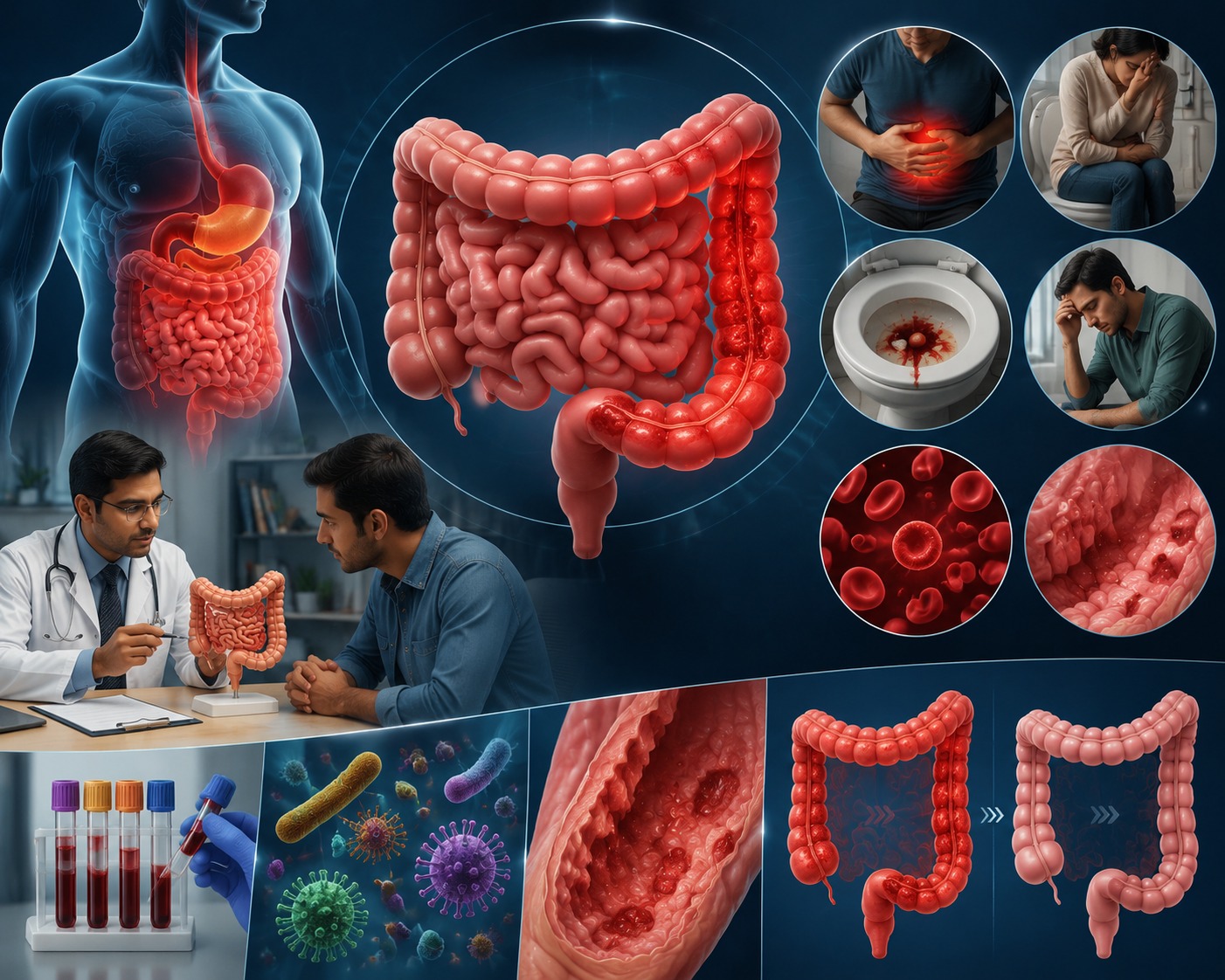
Three very different illnesses share almost identical symptoms. Still, only a proper work-up separates them.
| Condition group | What you notice | How the bowel appears | Urgency level | First test |
|---|---|---|---|---|
Functional · IBS
Irritable Bowel SyndromeAffects how the bowel moves and feels. |
Cramps, bloating and motions that swing between loose and hard. | The lining stays normal. Only the rhythm goes wrong. | Within days Discomfort dominates, yet the bowel suffers no damage. | Clinical assessment, plus blood and stool screening. |
Inflammatory · IBD
Crohn’s & Ulcerative ColitisInflames and ulcerates the bowel wall itself. |
Blood and mucus in motions, weight loss and night-time urgency. | Ulcers, swelling and eventual narrowing appear. | Priority Damage accumulates quietly during every untreated month. | Colonoscopy with biopsy, alongside inflammatory markers. |
Infective & malabsorptive
Infection & Coeliac DiseaseFollows an organism, a parasite or gluten sensitivity. |
Sudden watery motions, or years of bloating with poor weight gain. | The absorbing surface flattens or inflames temporarily. | Same week Many cases resolve fully once we identify the cause. | Stool studies, coeliac antibodies and a duodenal biopsy. |
Nearly everyone arrives having already named the problem. However, the wrong label delays Intestinal Disease Treatment in KPHB by months. These six come up most often at our KPHB clinic.
Daily bloating settled with a chemist’s sachet
Frequently IBS, occasionally coeliac disease. Antacid powders never address either one
Loose motions blamed on one outside meal
Beyond three weeks, food stops being the culprit. Chronic infection or colitis takes over
Blood after motion, assumed to be haemorrhoids
Mucus alongside blood suggests ulcerative colitis instead. A scope settles the question
Lifelong bloating accepted as normal
Adults do get diagnosed with coeliac disease. One blood test opens that door
Symptoms attributed to office pressure alone
Stress worsens IBS genuinely. Even so, fever, blood or weight loss point towards IBD
Steroid courses repeated every few months
Repeated steroids signal uncontrolled disease. A proper maintenance plan replaces them
Each sign below deserves a specialist opinion. Besides, note how long it has lasted before your visit.

Cramping settles after a motion, then comes back. Typically, it follows meals closely.
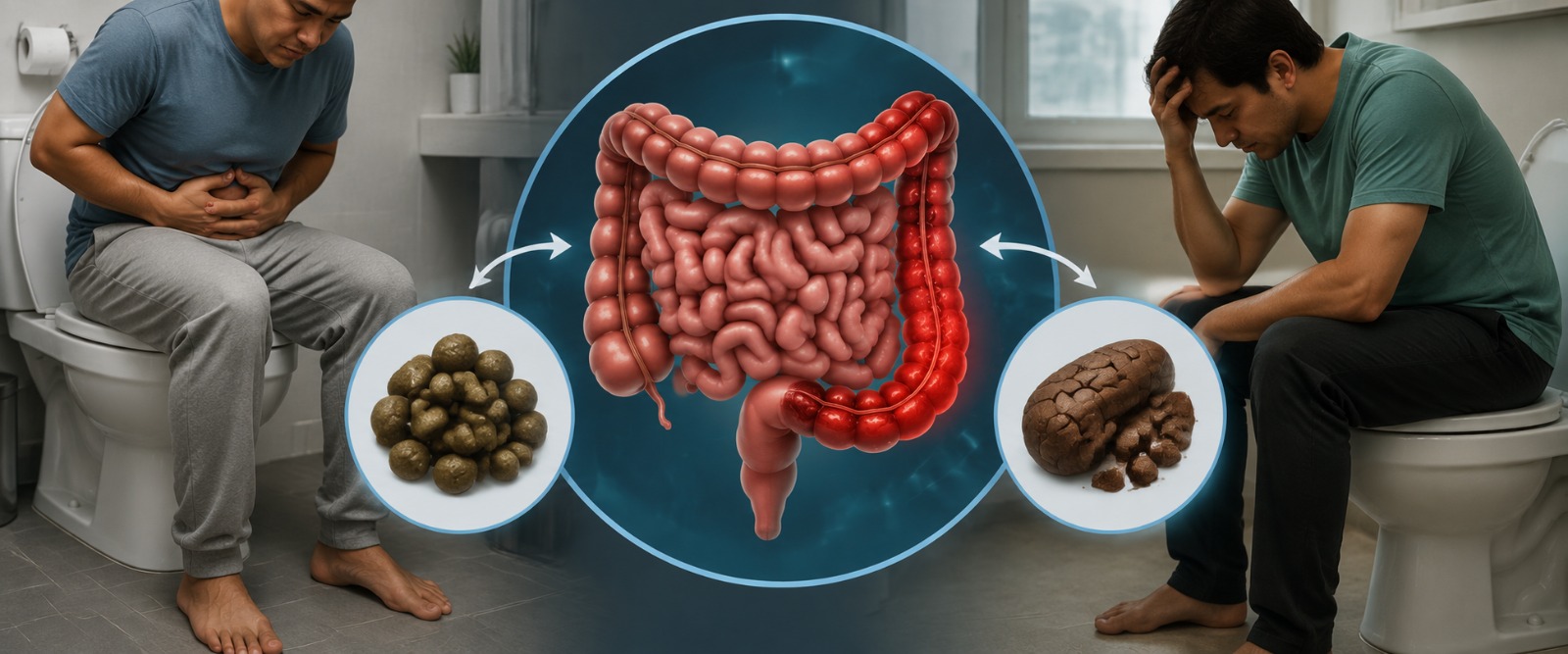
Loose stools or constipation persist beyond three weeks. Sometimes both alternate weekly.
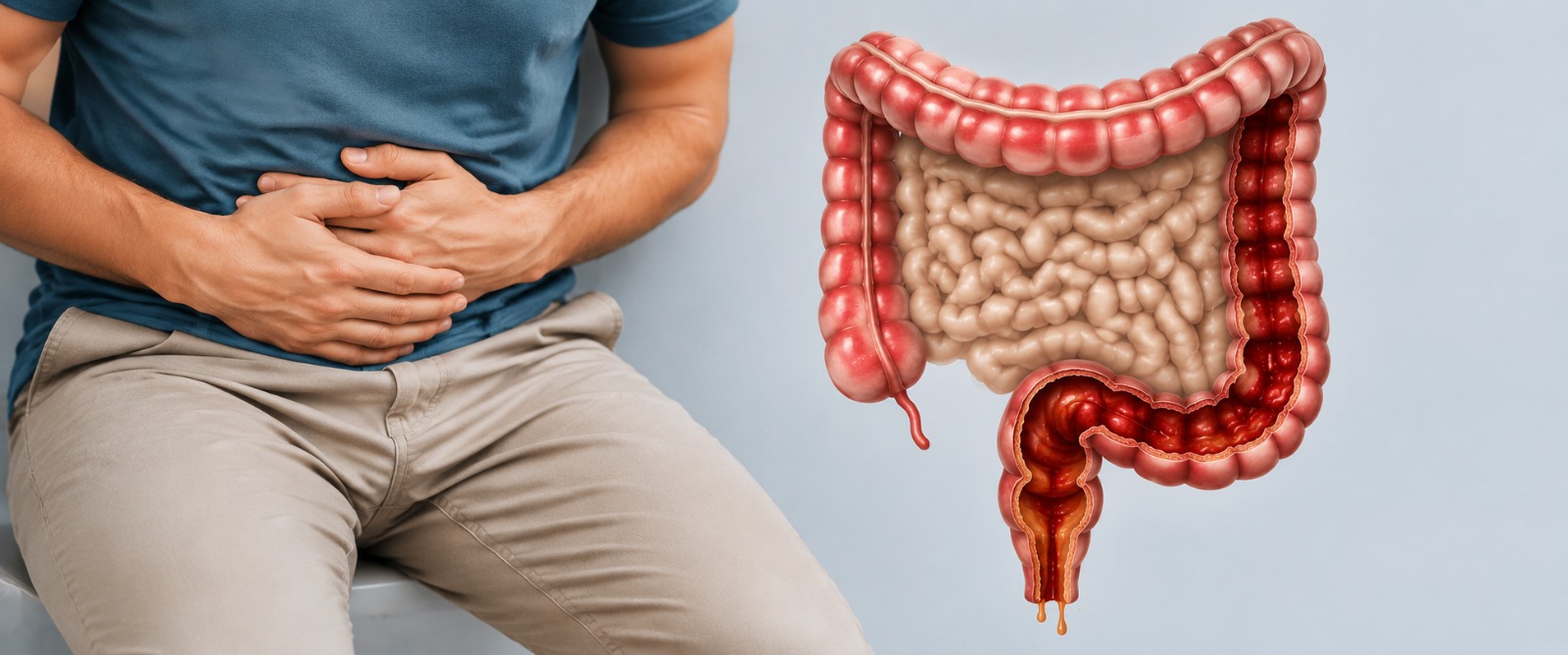
Slime appears alongside blood. Usually, this combination rules simple piles out.
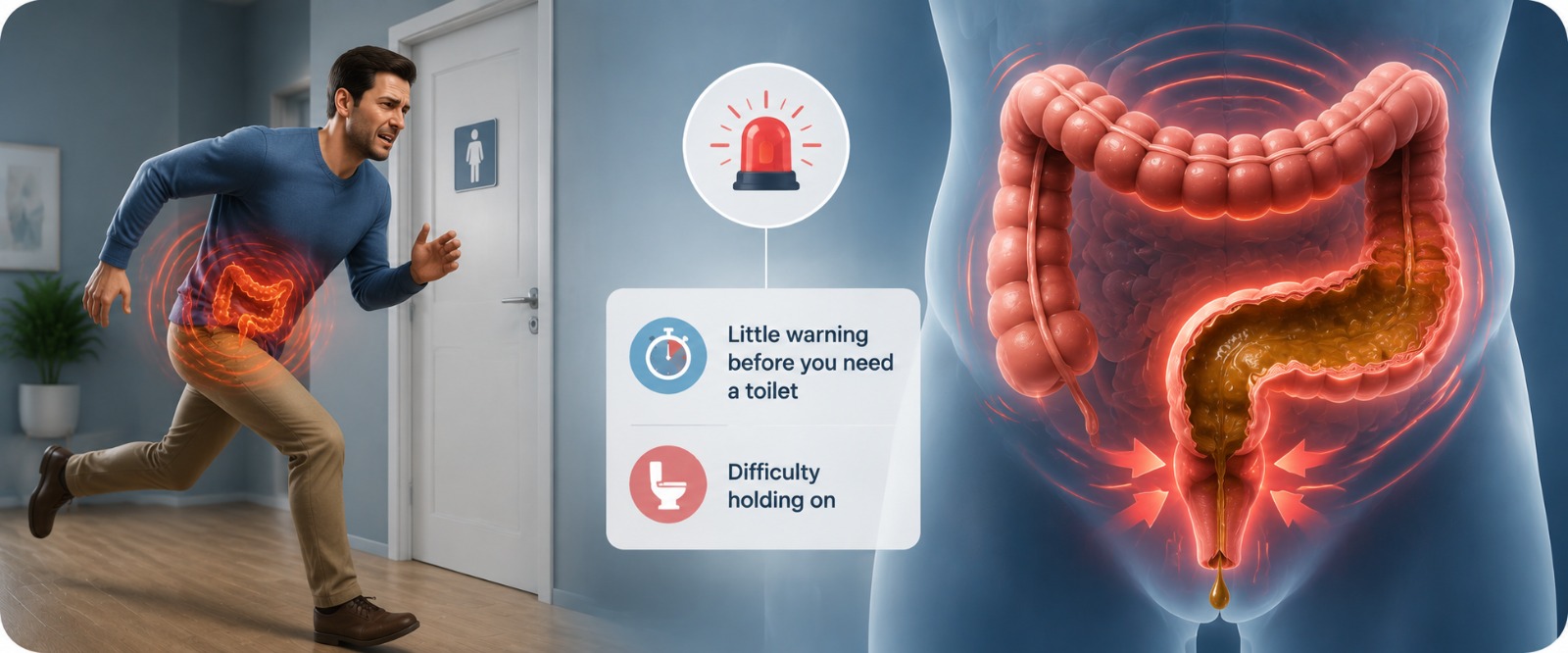
Symptoms wake you from sleep. Clearly, functional causes do not behave this way.

Clothes loosen although your appetite feels unchanged. Often, inflammation drives it.

Iron tablets lift the count briefly. Afterwards, it drifts down once more.
Treating symptoms without the diagnosis invites a relapse. Hence, we work through these conditions carefully.
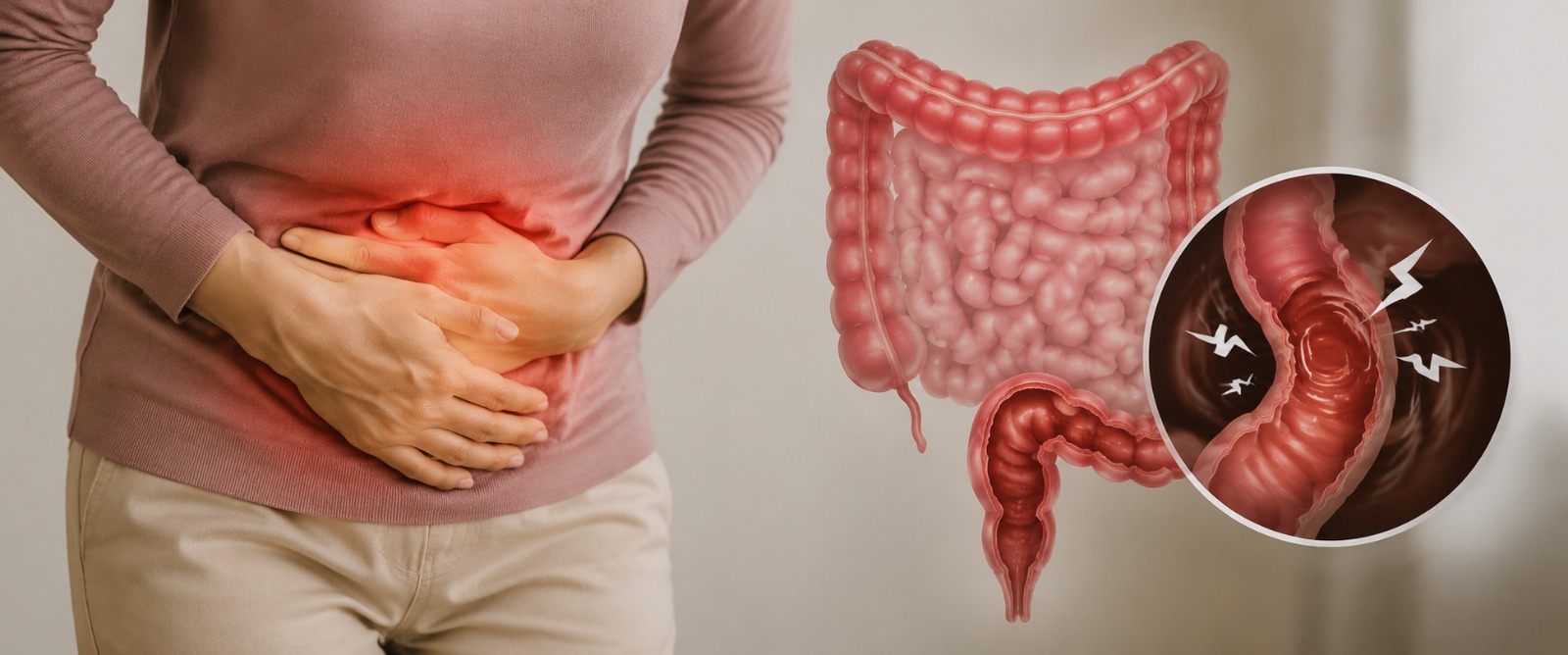
IBS remains the commonest diagnosis at our OPD. The gut becomes oversensitive without turning inflamed. Moreover, sleep, stress and specific foods drive most flare-ups.

Crohn’s inflames any segment from mouth to anus. Deep ulcers form and eventually narrow the bowel. Consequently, early control protects you from surgery later.
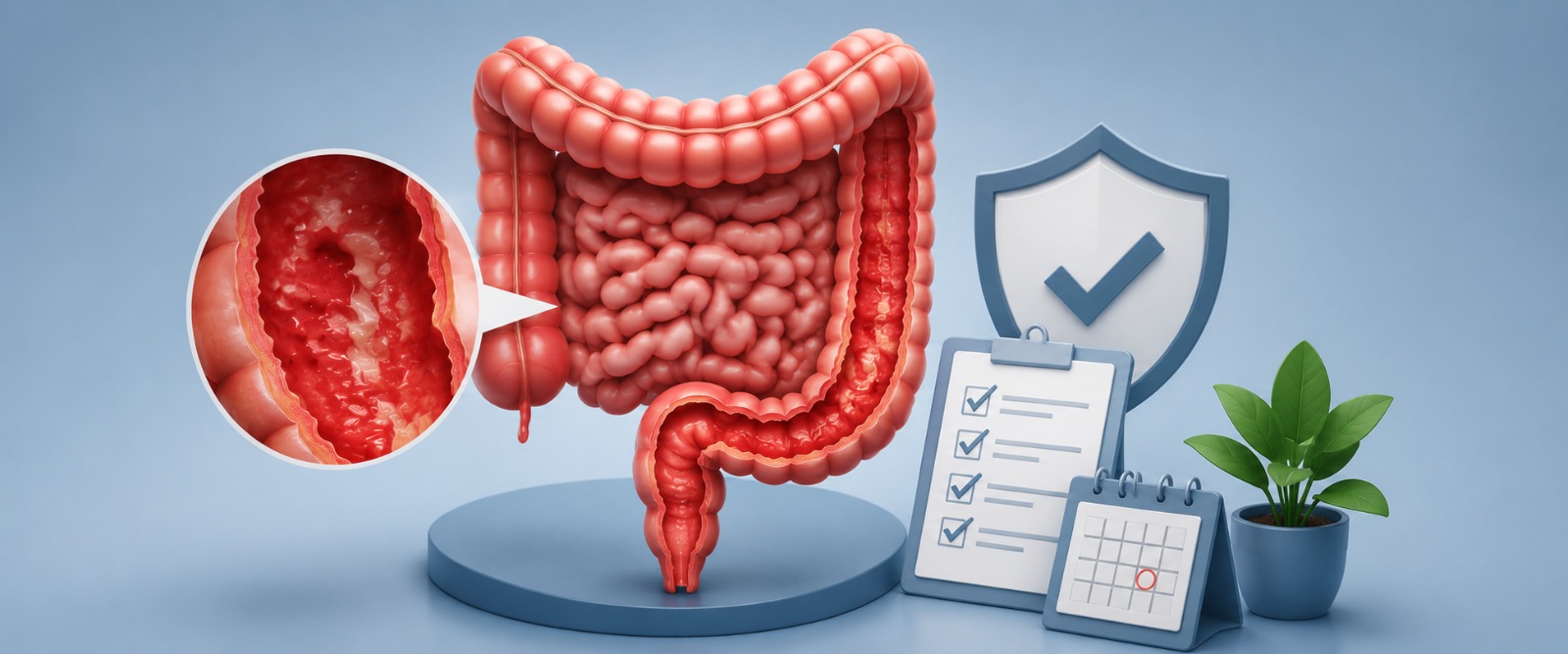
Colitis inflames the rectum and spreads upward continuously. Blood, mucus and urgency define the picture. Additionally, planned surveillance lowers the long-term cancer risk.
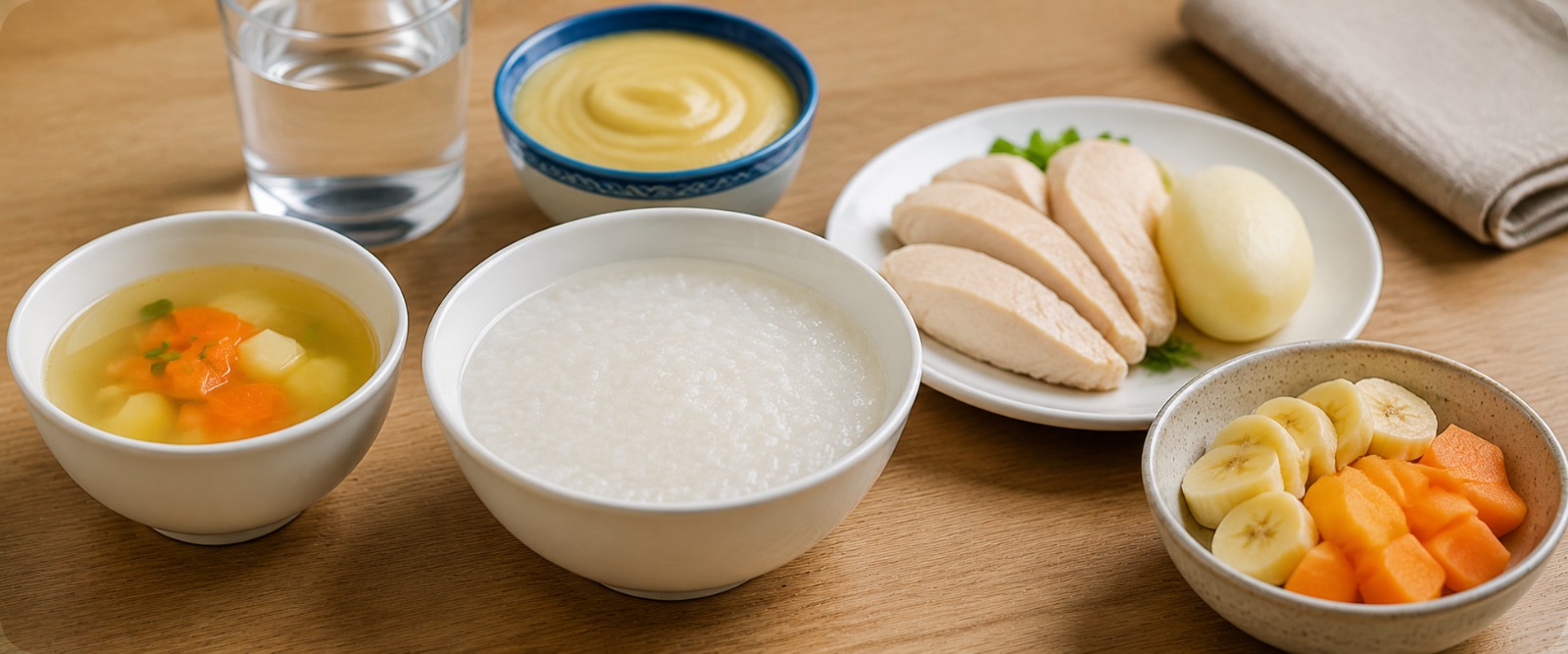
Gluten injures the absorbing surface of the small bowel. Bloating, anaemia and poor weight gain follow. Fortunately, a strict gluten-free diet reverses much of it.
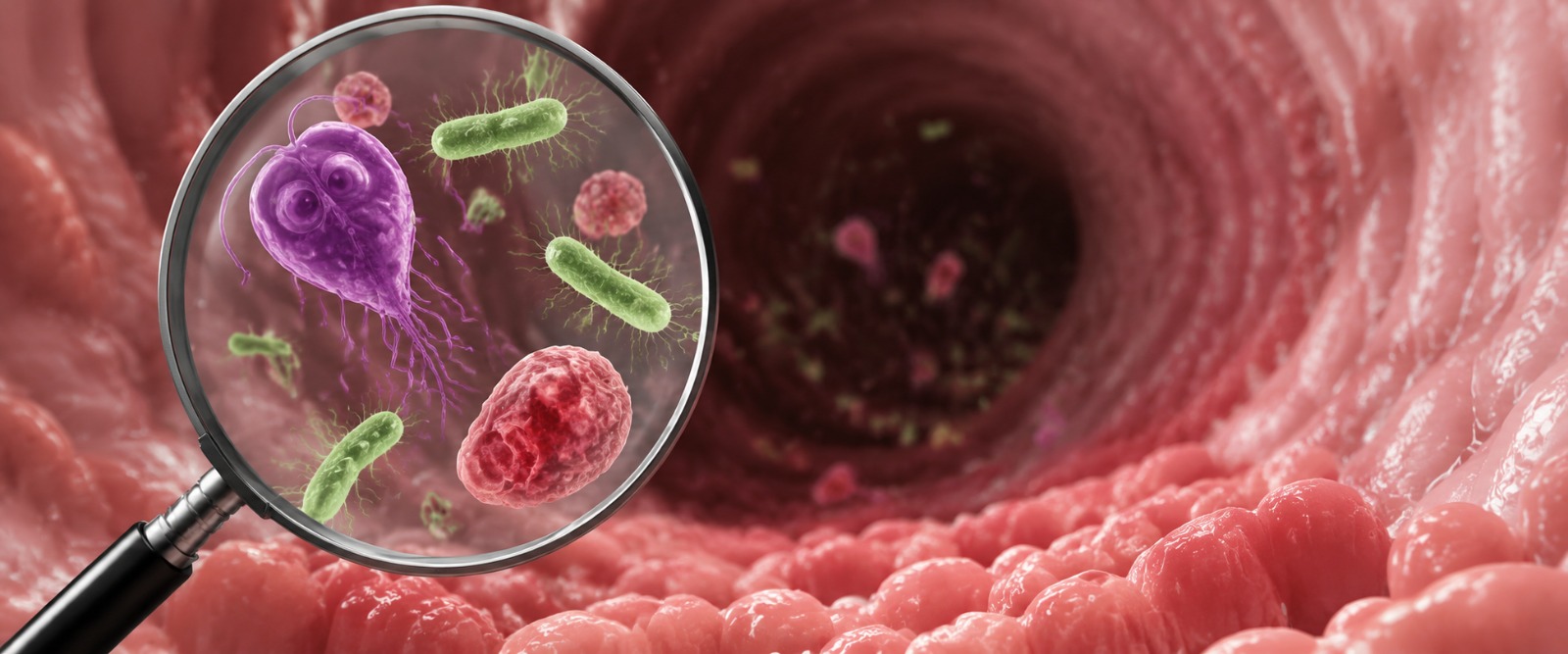
Amoebiasis, giardiasis and bacterial colitis stay common across Hyderabad. Stool tests identify the organism precisely. Then a short targeted course clears it.

Small pouches and growths develop as the colon ages. Some bleed, while others turn cancerous quietly. Therefore, timely colonoscopy matters after forty-five.
Medicines do half the work. Meanwhile, daily habits decide how often your symptoms return.
Intestinal Disease Treatment in KPHB always follows the diagnosis, never precedes it. Even so, not every patient needs every test. Instead, each step decides whether the next one follows.
First, we map your symptom pattern across a full day. Then we review diet, travel, tablets and family history. Also, an abdominal examination checks for tenderness and masses.
A haemogram, CRP and ferritin reveal hidden inflammation. Besides, faecal calprotectin separates IBS from IBD reliably. Stool studies simultaneously rule out parasites.
Untreated coeliac disease imitates IBS for years. Therefore, we screen antibodies in every long-standing case. Thyroid testing explains stubborn constipation too.
Next, a scope inspects the entire large bowel directly. We take biopsies even from normal-looking segments. Sedation keeps the whole procedure comfortable.
CT or MR enterography maps small-bowel Crohn’s disease accurately. Additionally, an on-site FibroScan checks the liver within minutes. No second trip becomes necessary.
Finally, you leave with a named condition and a clear plan. Your diet chart and tablet list arrive in writing. We also state plainly when the next review falls due.
Irritable bowel syndrome responds beautifully to a structured plan. Accordingly, we choose from the options below.

Certain sugars ferment heavily and swell the bowel. We remove them briefly, then reintroduce each group. This way, you learn your own triggers rather than avoiding everything.
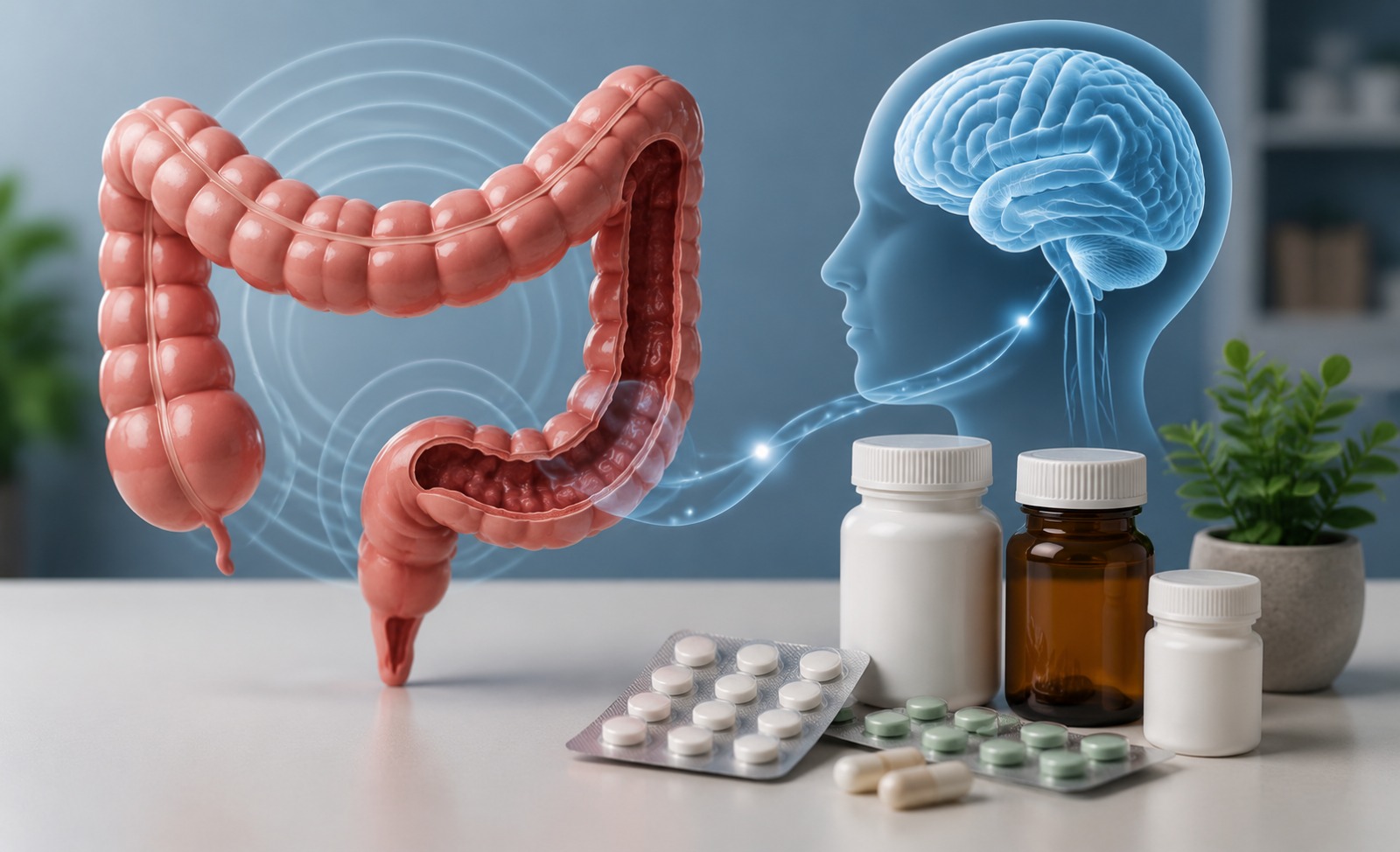
Antispasmodics relax a cramping colon within days. Meanwhile, low-dose neuromodulators calm an oversensitive gut. Doses stay small and reviews stay frequent.
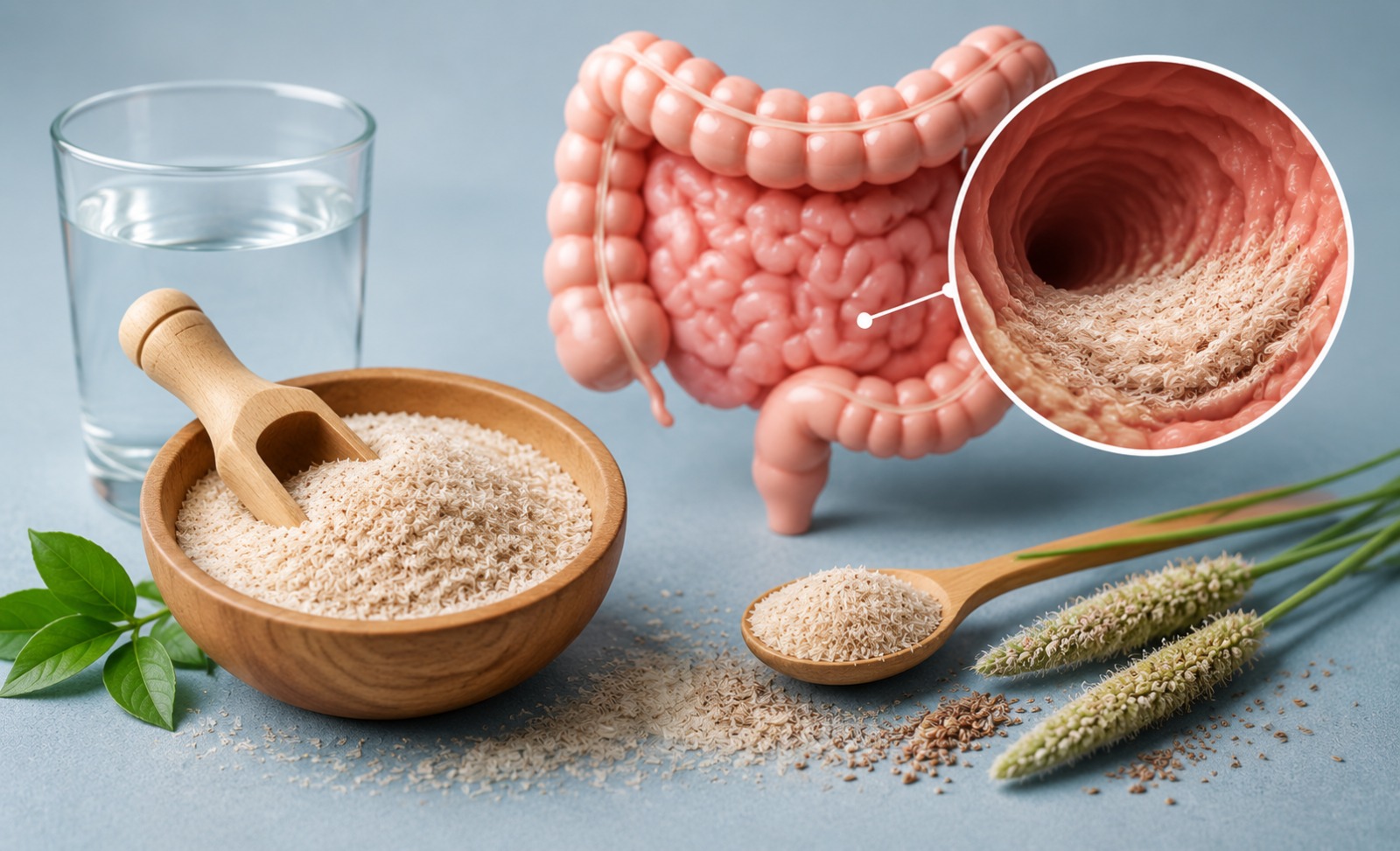
Ispaghula bulks the stool gently without producing gas. For diarrhoea-dominant patients, it firms motions instead. Fluid intake rises alongside every fibre increase.
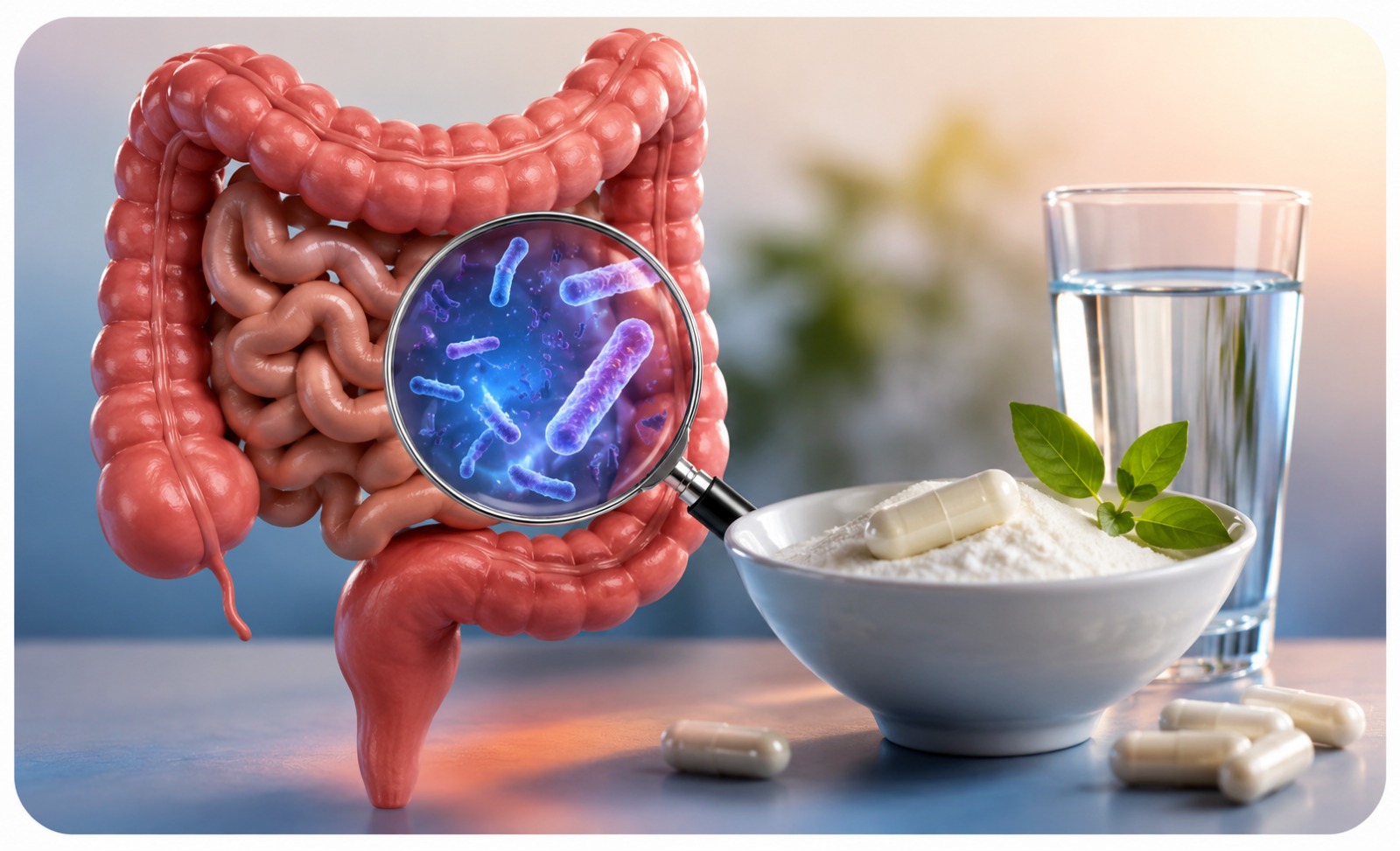
Selected strains reduce bloating over eight to twelve weeks. However, random shop-bought sachets rarely help. We name the strain and the duration precisely.
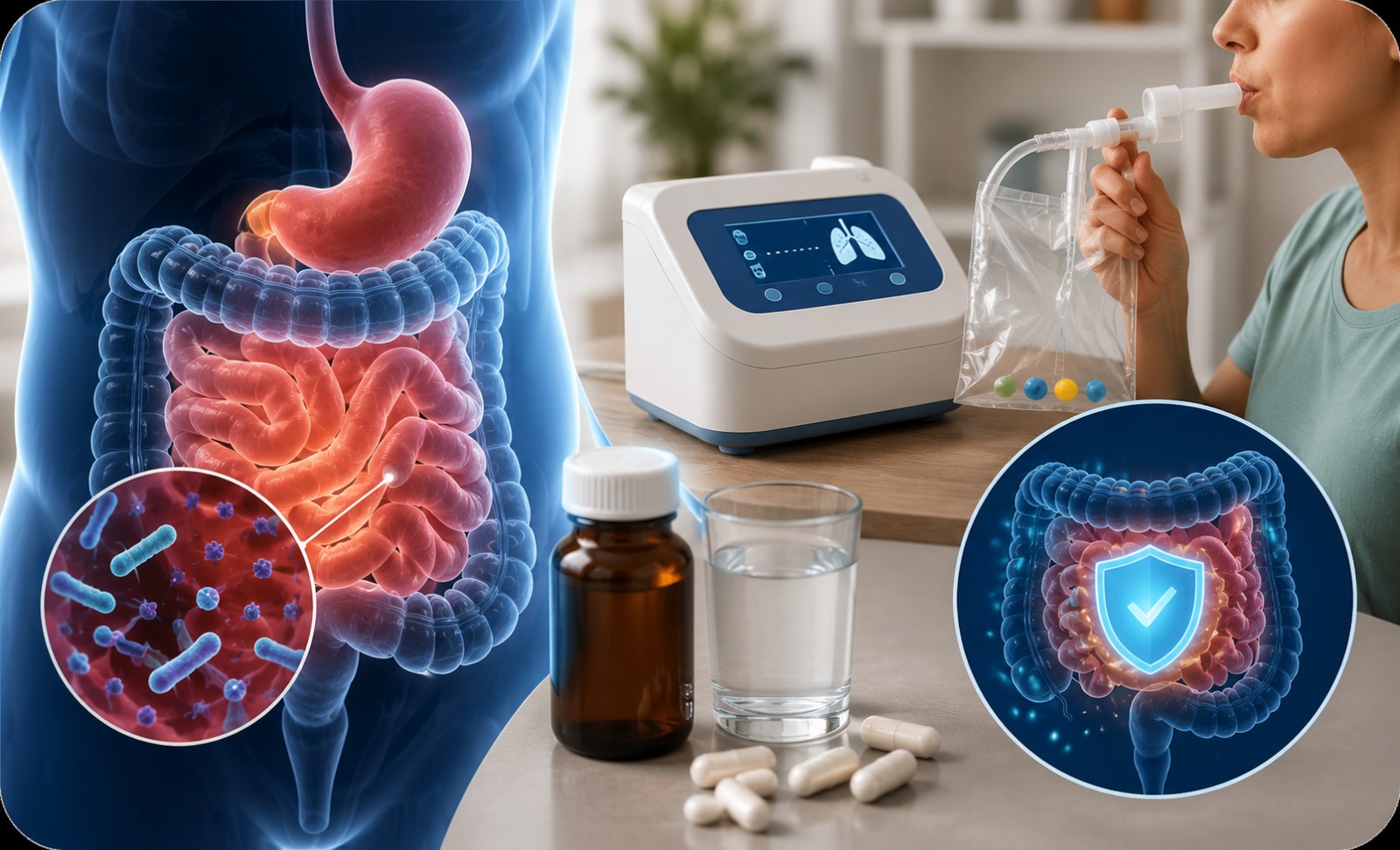
Small intestinal overgrowth mimics IBS almost exactly. A breath test confirms it within a morning. Then a short antibiotic course settles the bloating.

The gut and brain talk constantly through shared nerves. Hence, breathing routines and steady sleep genuinely reduce flares. We suggest practical steps, not vague advice.
IBD treatment in KPHB aims at healed tissue, not merely fewer symptoms. Thereafter, we select from these options.
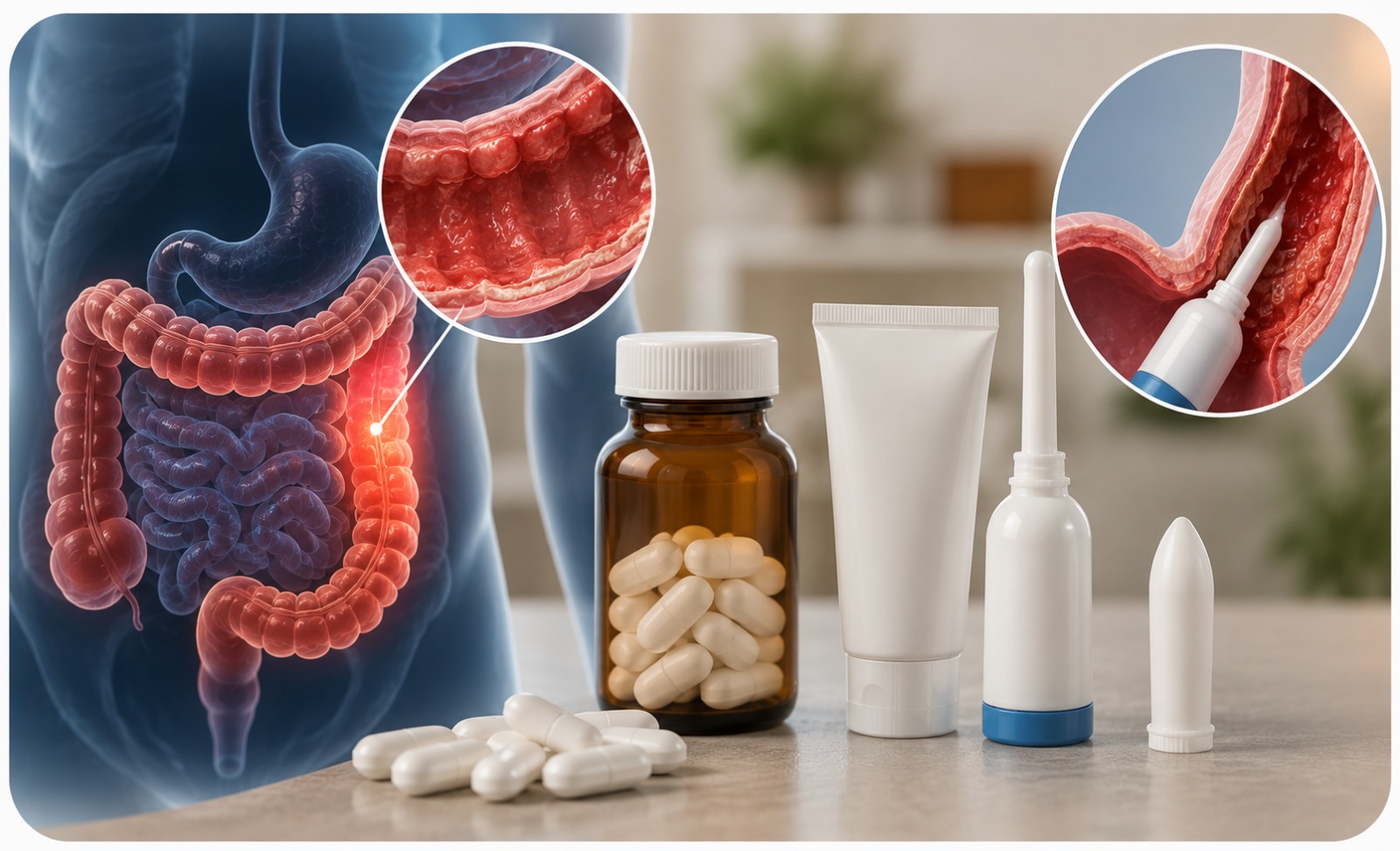
Mesalamine calms mild to moderate ulcerative colitis effectively. Oral and rectal forms often work best together. Many patients stay well on this alone for years.

Steroids break an active flare quickly and predictably. Even so, they never suit long-term control. We taper them while a maintenance drug takes over.

Azathioprine keeps the disease quiet for the long run. We monitor your counts and liver regularly throughout. Consequently, steroid courses become far less frequent.
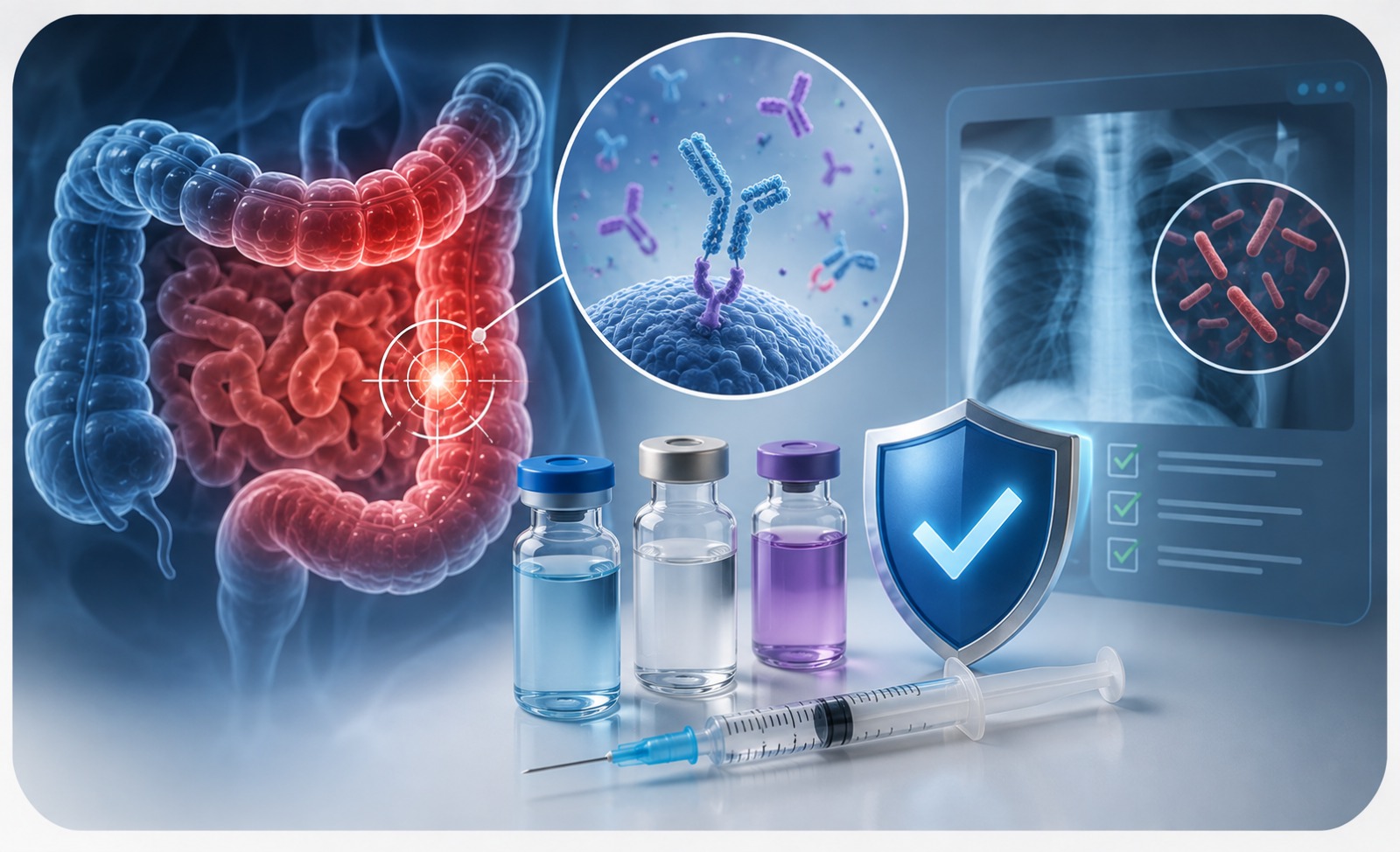
Biologics block the exact signals that drive intestinal inflammation. Moreover, they heal ulcers rather than masking pain. We screen for tuberculosis before starting any of them.

Inflamed bowel absorbs iron, B12 and vitamin D poorly. We correct each deficiency alongside the main treatment. Energy and weight then recover far more quickly.
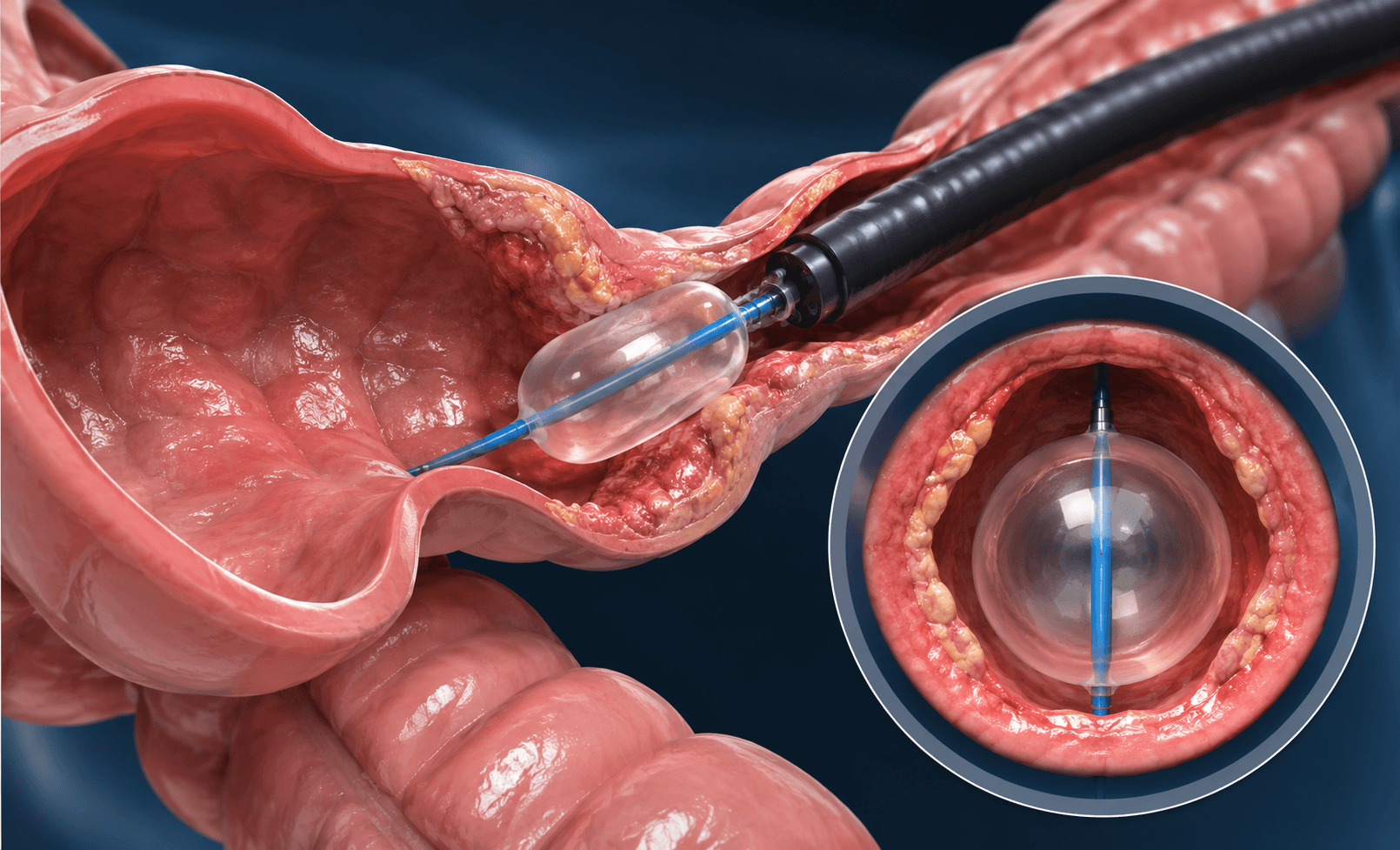
Chronic Crohn’s disease sometimes narrows a short bowel segment. A balloon widens that stricture during the scope itself. Often, this defers surgery by several years.
Nobody starts on the strongest medicine available. Rather, we climb only when your reports ask us to.
We never jump to the strongest drug immediately. Instead, treatment climbs one rung at a time, guided by your scope and your reports.
A short steroid or 5-ASA course settles the active flare. Symptoms usually improve within two weeks.
An immunomodulator takes over as the steroid tapers away. Blood counts get checked every few weeks initially.
A repeat scope checks whether the ulcers have actually closed. Calprotectin tracks the same thing between scopes.
Persistent ulcers justify moving to a biologic agent. We explain the benefits, the costs and the risks beforehand.
Biologics cost considerably more than tablets. Therefore, we discuss insurance cover and biosimilar options openly before you decide.
If a biopsy raises concern: we move straight to oncology referral for suspected colorectal cancer. Your scope images, biopsy report and blood results travel with you. Therefore, nothing gets repeated unnecessarily.
Bowel symptoms get dismissed as gastric trouble far too readily. Someone hands over an enzyme syrup. Another advises cutting spice and waiting. Meanwhile, inflammation quietly damages the lining. Patients reach this gastroenterologist near KPHB from Kukatpally, Miyapur and Nizampet. Others travel further across Hyderabad for bowel disease treatment under one specialist. Consequently, Intestinal Disease Treatment in KPHB stays under one roof here.
We scope at the KPHB Colony clinic itself. So, you skip the referral chain completely. Biopsy results then return to the same doctor.
Long-standing bowel disease often affects the liver too. Hence, we measure liver stiffness during the same visit. No second trip across the city becomes necessary.
Chronic illness needs regular review, not rare visits. Therefore, we run Sunday morning clinics and late evening slots. Working families need not take leave.
The same specialist sees you at every visit. As a result, nothing gets lost between departments. Your reports and your plan stay in one pair of hands.

Consultant Gastroenterologist & Liver Specialist. Advanced Interventional Endoscopist at Gokul Gastro & Liver Care, KPHB. He also consults at Medicover Hospitals, Financial District. As an intestinal disease specialist in Hyderabad, he manages IBS and IBD cases alike.
Message us with your symptoms and how long they have lasted. Then we suggest the earliest suitable slot. Also, you can share old reports over WhatsApp beforehand. Your consultation stays fully private.
A DM-qualified medical gastroenterologist should handle these conditions. Dr. Viswanath Kamisetty holds exactly that qualification.
Therefore, one specialist manages your scope, your medicines and your follow-up together. No referral chain slows things down.
IBS disturbs how the bowel works without damaging the lining. IBD, by contrast, inflames and ulcerates that lining.
Blood, fever, night-time urgency and weight loss point towards IBD. So, a colonoscopy with biopsy settles the question properly.
IBS has no permanent cure, yet it responds very well to treatment. Most patients lead a completely normal life afterwards.
Diet mapping, targeted medicines and better sleep together control it. Also, flares become shorter and far less frequent.
Not every patient needs one. Simple, short-lived symptoms often settle after basic tests alone.
However, bleeding, weight loss or diarrhoea beyond three weeks usually calls for a scope. Likewise, any first bleed after forty-five needs one.
Long-standing, extensive colitis does raise the risk over decades. Even so, that risk stays manageable with surveillance.
We schedule screening colonoscopies at planned intervals. Consequently, changes get caught at a treatable stage.
Most IBD patients do stay on maintenance treatment long term. Stopping abruptly usually invites a flare within months.
Nevertheless, doses often reduce once the lining heals fully. We review that possibility at every follow-up.
Cost depends on what you actually need. A consultation alone costs least. Colonoscopy, biopsy, FibroScan or biologic therapy add to it.
We explain every charge beforehand. Please call 90000 20315 or message us on WhatsApp.