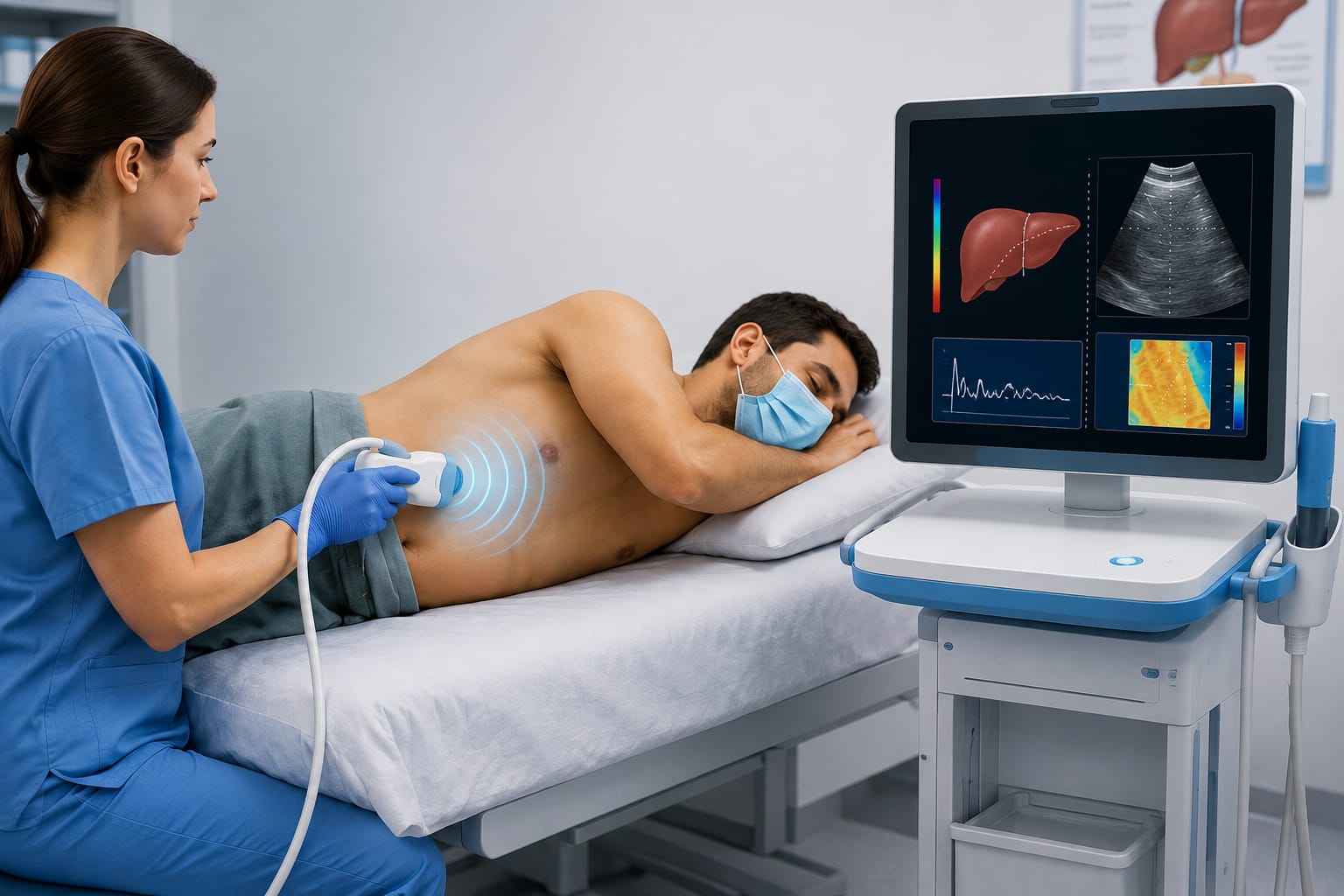
A FibroScan test in KPHB measures your liver stiffness and liver fat in under ten minutes. The
scan needs no needles, no dye and no radiation — you simply lie down, and the probe does
the rest.
On-site FibroScan machine, Sunday OPD, evening consultation hours, and your report explained
the same day — all under Dr. Viswanath Kamisetty (MBBS, MD, DM Medical Gastroenterology)
at Gokul Gastro & Liver Care, KPHB 13th Phase, Kukatpally.
A FibroScan liver test checks how stiff your liver has become. Stiffness
climbs as scar tissue slowly replaces healthy cells, while a second reading estimates how much
fat sits inside the organ. Together, these two numbers describe your liver far better than a
routine ultrasound alone.
Doctors call this technology transient elastography, though most patients simply call it a
liver scan. The probe rests on your right side, between two ribs, sends a gentle pulse inward,
and times the wave that returns — sound moves faster through stiff tissue than through
soft tissue, so the machine turns wave speed into a stiffness score. The same pulse also tracks
how much the signal fades, which reflects fat content.
What the two readings mean
Every scan produces two separate numbers, and each one answers a different question about your
liver.
Liver stiffness measurement (kPa)
Your kPa value reflects fibrosis rather than fat. Lower figures suggest a soft, healthy liver;
higher figures point towards advanced scarring. A single reading never settles the diagnosis on
its own — your doctor reads it alongside your history and blood work.
Controlled attenuation parameter (CAP)
CAP appears in decibels per metre, shortened to dB/m. This figure grades fatty change from mild
to severe, so you learn whether fat, scarring or both deserve attention first.
When It's Advised
When doctors advise a FibroScan in KPHB
Not every patient requires elastography. Still, several everyday situations make it genuinely
worthwhile — these are the referrals we see most often at our Kukatpally clinic.
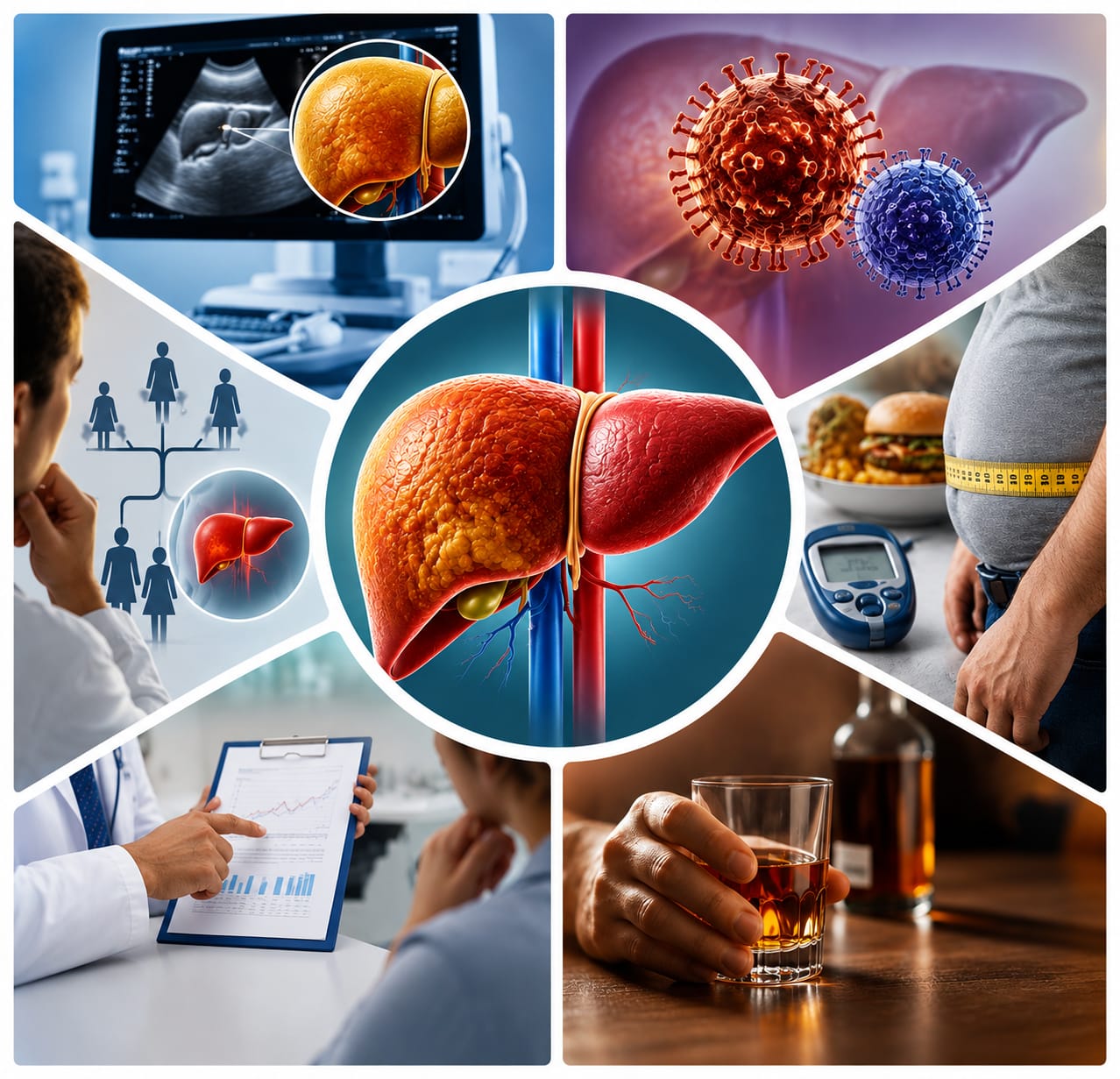
Fatty liver or raised enzymes on routine testing
Fatty liver reported on a routine abdominal ultrasound, or raised SGPT and SGOT values on a
company health check.
Long-standing hepatitis B or C
Chronic viral hepatitis is one of the most common reasons for referral at our clinic.
Diabetes, obesity or high triglycerides
Type 2 diabetes, central obesity or high triglycerides all raise the value of checking early.
Regular alcohol intake over years
Drinking stretched over several years is one of the most common reasons we scan.
Follow-up after treatment
Planned review after antiviral therapy or a lifestyle change, to confirm the numbers are
actually moving.
Family history of cirrhosis or cancer
A strong family history is worth mentioning at your first visit, even without symptoms of
your own.
>
What It Tracks
Conditions we track with a Liver FibroScan in KPHB
A Liver FibroScan in KPHB suits long-term monitoring particularly well, since the scan repeats
safely.
MASLD (fatty liver disease)
Non-alcoholic fatty liver disease, now termed MASLD under the newer global naming.
Alcohol-related liver disease
Tracked at any stage, from early fatty change through to established scarring.
Chronic hepatitis B and C
Regular scans track how the liver responds through the course of treatment.
Autoimmune hepatitis
Patients under maintenance therapy use repeat scans to confirm the disease stays
controlled.
Unexplained enzyme rise
Enzymes staying raised beyond three months, without an obvious cause on first review.
>
Your Visit
What happens during your scan
A short, predictable visit — here's exactly what to expect, in order.
1
Prepare beforehand
Fast for three hours (plain water stays fine), wear loose clothing that opens easily at
the right side, pause alcohol for 48 hours, and carry earlier scans, blood tests and
current prescriptions.
2
Get into position
You lie flat with your right arm tucked behind your head, and the doctor applies gel and
settles the probe between two ribs.
3
The scan itself
The machine collects ten valid measurements in quick succession. You feel only a light
flick against the skin — no needle, no discomfort.
4
Results appear immediately
Your figures appear on screen straight away, with no wait for a lab to process
anything.
5
Discuss with your doctor
Dr. Kamisetty explains each number in plain language, and together you agree on diet
targets, medication and the next review date.
Comparison
FibroScan compared with other liver investigations
No single investigation suits everybody. Your gastroenterologist matches the test to your
symptoms, blood work and body type — frequently, elastography and blood scores work best as a
pair.
FibroScan
Chosen when you need fibrosis and fat graded quickly, without needles or radiation.
Ultrasound abdomen
Chosen when the doctor wants a structural look at liver, gallbladder and bile ducts.
FIB-4 & APRI scores
Chosen when a quick blood-based risk estimate helps before any imaging is ordered.
Liver biopsy
Chosen when the diagnosis stays unclear even after non-invasive testing.
MR elastography
Chosen when fluid in the abdomen or a very high BMI limits the ultrasound probe.
Liver function tests
Chosen when enzyme trends and bilirubin need tracking alongside your scan.
>
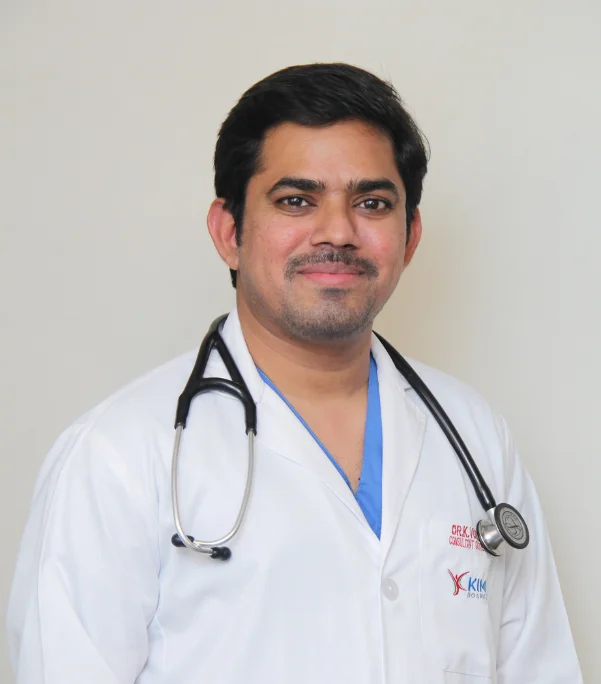
Dr. Viswanath Kamisetty
MBBS · MD · DM (Medical Gastroenterology)
Consultant Medical Gastroenterologist & Hepatologist —
Gokul Gastro & Liver Care, KPHB · Medicover Hospitals, Financial District.
13+ years experience20,000+ patients5.0★ rated
Meet your FibroScan specialist in KPHB
Dr. Viswanath Kamisetty leads Gokul Gastro & Liver Care at KPHB 13th Phase. As a
DM-qualified FibroScan specialist in KPHB, he performs and interprets every scan himself, so
you discuss your report with the same doctor who ran it. His practice covers fatty liver, viral
hepatitis, cirrhosis and endoscopic gastroenterology, and evening hours plus Sunday OPD help
working patients attend without losing a workday.
The machine sits inside our clinic, so nobody travels twice
One DM-qualified specialist handles scanning, reporting and treatment
Reports arrive on the same visit, never days later
KPHB 13th Phase location keeps Kukatpally patients close to home
Book your FibroScan test in KPHB today.
Liver damage builds quietly, yet it rarely arrives without warning signs on a scan — a
ten-minute FibroScan gives you clarity long before symptoms appear. Charges depend on the probe
used, whether a consultation is added, and whether the scan is part of a follow-up package;
ring 90000 20315 for today's exact rate, and our team will confirm slot timings and fasting
instructions during the same call. Booking takes one phone call.
No, the scan causes no pain at all. You feel a light tap against the skin, similar to a gentle
flick, and the probe never breaks the skin surface.
Do I need to fast before a FibroScan liver test?
Yes, three hours of fasting keeps the reading accurate. Plain water stays allowed throughout
— heavy meals temporarily raise stiffness, so timing genuinely matters.
How long does the scan take?
The scanning itself finishes within five to ten minutes. Your consultation and report
discussion take a little longer, so plan for about thirty minutes at the clinic overall.
Can a FibroScan replace a liver biopsy?
Often it can, particularly in fatty liver and viral hepatitis. A few complex cases still need
biopsy for a final answer, and your gastroenterologist will explain which route fits your
situation.
Is FibroScan safe during pregnancy?
Doctors generally avoid the scan during pregnancy as a precaution. Blood-based scores usually
guide care until delivery instead — please mention pregnancy while booking your slot.
How often should I repeat a Liver Fibrosis Test in KPHB?
Once a year suits most stable patients. Anyone on active treatment may need a six-month scan,
and your doctor sets the interval after reviewing your first result.
Does FibroScan detect liver cancer?
No, elastography grades stiffness and fat rather than tumours. Ultrasound, CT or MRI handle
cancer screening, though a high stiffness score tells your doctor to start regular
surveillance.
Which doctor should I consult for a FibroScan in KPHB?
Choose a gastroenterologist with DM qualification and hands-on elastography experience. At
Gokul Gastro & Liver Care, Dr. Viswanath Kamisetty personally performs and reports every
scan.