
Subtotal $0.00
Gallstone Treatment: 7 Warning Signs You Shouldn’t Ignore
Gallstone treatment is often unnecessary when stones cause no symptoms. However, pain, bile duct stones or complications may require medical or surgical care. Indian studies place gallstone prevalence at roughly 4% to 6% of adults, and most of these people never develop symptoms. Knowing the warning signs helps you reach a gastroenterologist at the right time.
What Are Gallstones?
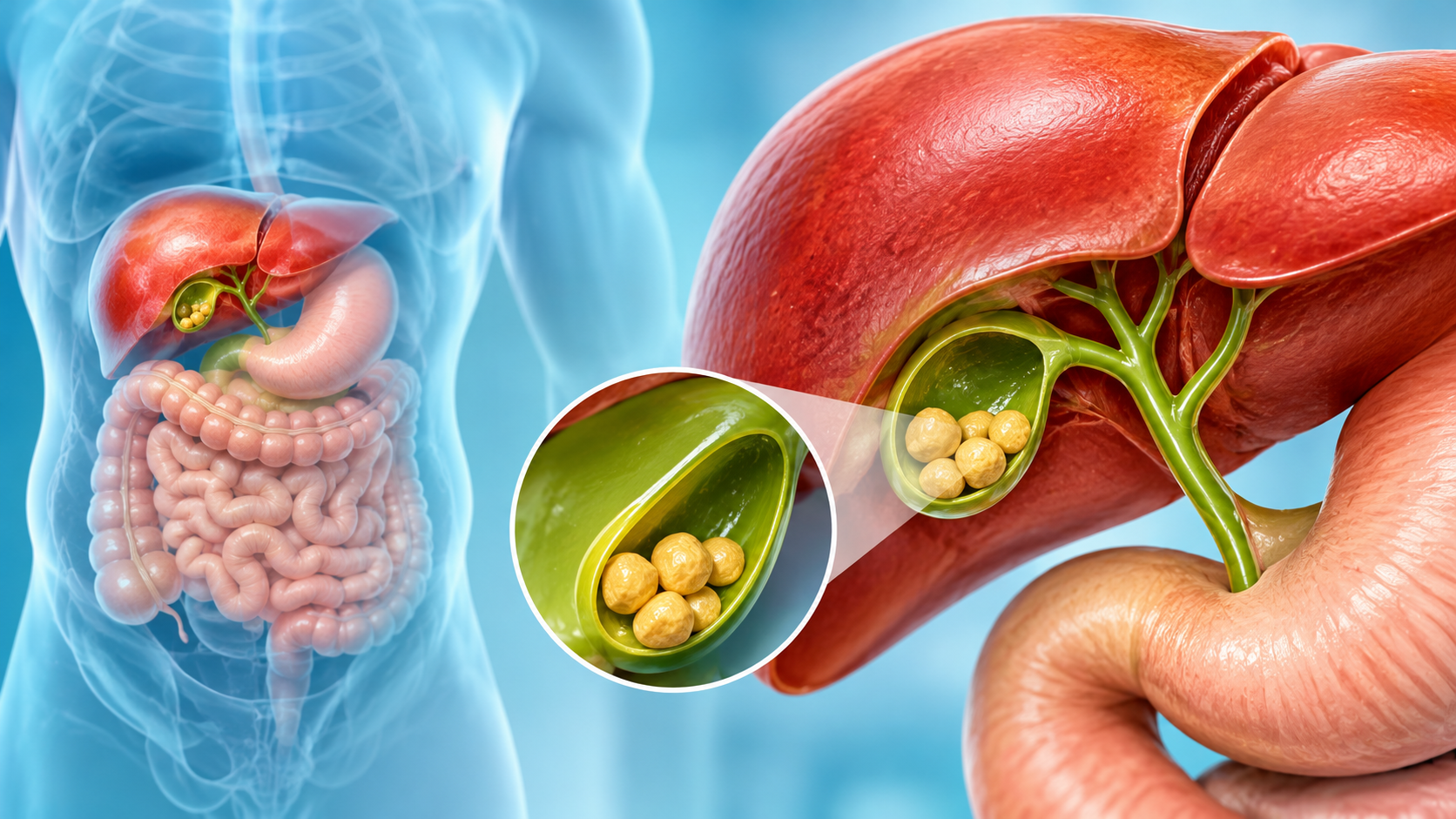
Gallstones are hard deposits that form inside the gallbladder. The gallbladder is a small pear-shaped organ below your liver. It stores bile, a fluid that helps your body digest fat. Bile carries cholesterol, bile salts and waste pigments together.
When this mixture turns unbalanced, crystals settle and slowly harden. Stones then grow over months or years. Sizes vary widely. Some stay as small as a grain of sand. Others grow as large as a lemon.
One person may carry a single stone. Another may carry dozens. Most people with silent gallstones do not develop symptoms, and these stones need no treatment.
Why Bile Turns Into Stones
Three mechanisms explain most cases. Firstly, excess cholesterol in bile cannot stay dissolved. Secondly, too much bilirubin forms dark pigment stones. Thirdly, a gallbladder that does not empty properly allows bile to stagnate. Leftover bile then thickens into sludge and later into stones.
Gallstones Versus Gallbladder Inflammation
These two terms describe different situations. Gallstones alone may sit quietly, or cause pain that comes and goes. Acute cholecystitis means the gallbladder itself has become inflamed, usually because a stone blocks its outlet.
Inflammation changes the urgency completely. Pain lasts longer, fever often appears, and the abdomen turns tender. This situation needs hospital assessment, not a planned appointment.
7 Warning Signs of Gallstones You Shouldn’t Ignore
Gallstones can cause several warning signs. Read the urgency note under the list carefully.
- Sudden, intense pain in the upper right abdomen, often after a fatty meal
- Pain that spreads towards the right shoulder blade or upper back
- Pain lasting from thirty minutes to a few hours before settling
- Nausea or vomiting that follows the pain episode
- Yellow eyes or yellow skin, which suggests a blocked bile duct
- Dark urine with pale, clay-coloured stools
- Fever or chills along with abdominal pain
Signs 5, 6 and 7 always need same-day hospital assessment. Signs 1 to 4 need urgent assessment too when the pain is severe, lasts several hours, or comes with repeated vomiting. Milder, settling episodes can be reviewed at a planned appointment with a gastroenterologist.
Bloating, belching and heaviness are common complaints. On their own, these symptoms do not confirm gallstones. Acidity, gastritis, irritable bowel syndrome and fatty liver can produce a similar picture. A proper evaluation separates one cause from another.
Complications That Make Gallstone Treatment Urgent
Most gallstones never cause trouble. A minority, though, lead to conditions that need prompt care.
- Acute cholecystitis — the gallbladder becomes inflamed and infected when a stone blocks its outlet. Pain persists, and fever is common.
- Cholangitis — a stone blocks the bile duct and infection develops inside it. Fever, jaundice and pain often appear together.
- Gallstone pancreatitis — a stone blocks the pancreatic duct and inflames the pancreas. Severe upper abdominal pain spreads to the back.
Each of these is treatable, especially when caught early. That is the real reason to report symptoms rather than wait them out.
Who Faces a Higher Risk of Gallstones?
Risk reflects a combination of factors rather than any single food. Overall dietary pattern, body weight and metabolic health all influence it.
- Women, especially during pregnancy or after hormone therapy
- Adults above forty years of age
- People living with obesity, or losing weight very rapidly
- Patients with diabetes, insulin resistance or high triglycerides
- Families with a known history of gallbladder disease
- People with fatty liver, where a liver specialist may also be involved
Risk alone does not call for a scan. Routine yearly ultrasounds are not advised simply because risk factors exist. Instead, report new or repeated abdominal pain promptly.
How a Gastroenterologist Confirms Gallstones
Diagnosis starts with a detailed history. Your doctor asks about meal timing, pain pattern, duration and family history. A gentle abdominal examination follows. Blood tests and imaging then confirm the picture.
Tests Your Stomach Doctor May Advise
| Test | What it shows |
|---|---|
| Liver function test | Patterns that suggest bile duct obstruction or liver stress |
| Abdominal ultrasound | Stone size, stone count and gallbladder wall thickness |
| MRCP scan | Stones hidden inside the bile duct |
| Endoscopic ultrasound | Small duct stones that MRCP leaves unclear |
| CT scan | Complications such as infection or perforation |
Liver function tests and an ultrasound form the first step for suspected gallstone disease. Abnormal liver readings raise suspicion of a blocked bile duct. However, they cannot confirm a blockage on their own, so imaging decides the question. Ultrasound detects most gallbladder stones reliably, while duct stones often hide from it. An MRCP then adds clarity, and endoscopic ultrasound follows if doubt remains.
Gallstone Treatment Options Available Today
Four approaches exist, and your plan may combine more than one. Symptoms, stone location and overall health decide the path.
Observation for Silent Stones
Silent stones usually need no treatment at all. People with asymptomatic gallbladder stones and a normal biliary tree can be reassured that they need no treatment unless symptoms develop. Your doctor explains what to watch for and when to return.
Medicines That Dissolve Small Stones
Ursodeoxycholic acid can dissolve small, non-calcified cholesterol stones. The course runs for several months to two years. Stones return in many patients once tablets stop. Doctors therefore reserve this option for people who cannot undergo surgery, or who decline it.
Gallstone Surgery
Surgery is the definitive treatment for symptomatic stones. Removing the gallbladder prevents new gallbladder stones from forming. Digestion continues normally afterwards for almost everyone.
Laparoscopic Cholecystectomy
A trained surgeon makes three or four keyhole cuts. A small camera guides the procedure throughout. The gallbladder then comes out through one opening. Operating time varies with the patient’s condition and the complexity of the case. Acute cholecystitis usually calls for early laparoscopic surgery, generally within a week of diagnosis.
Recovery After Keyhole Surgery
Recovery timelines differ from person to person. Many patients walk on the same day and resume desk work within a week. Others need two weeks or longer, particularly after inflammation, open surgery or other health problems. Heavy lifting waits longer still, exactly as your surgeon advises.
Day-Care Discharge Checklist
- Pain controlled with simple oral tablets
- Pulse, temperature and blood pressure within normal range
- Able to walk and pass urine comfortably
- Fluids staying down without vomiting
- Written wound-care, diet and follow-up instructions in hand
When Open Surgery Is Needed
Open surgery is not outdated. Surgeons choose it when keyhole surgery cannot be completed safely. Dense adhesions, severe inflammation and unclear anatomy are common reasons. Safety guides that decision, never preference.
ERCP for Bile Duct Stones
Sometimes a stone slips into the common bile duct. An endoscope can then remove it through the mouth, without any cut. Clearance may happen before gallbladder surgery, during the same operation, or shortly afterwards. Your clinical condition and the hospital’s available expertise decide that sequence.
When Stomach Pain Treatment Cannot Wait
Some situations need an emergency room rather than an appointment slot.
- Severe abdominal pain that does not settle
- Fever or chills along with abdominal pain
- Yellowing of the eyes or skin
- Repeated vomiting that blocks even plain water
- A rigid, tender abdomen that hurts on light touch
Each point can signal infection, blockage or pancreatitis. Pain relief may control the symptom for a while. Severe or persistent pain still needs urgent medical assessment to identify the cause.
How to Choose the Best Gastroenterologist for Your Gallstone Treatment
Two specialists share this journey, and their roles differ.
A gastroenterologist diagnoses biliary disease, manages symptoms and performs ERCP for duct stones. A trained general or laparoscopic surgeon removes the gallbladder itself. Many hospitals run both services together.
Check these points before booking an appointment:
- Recognised qualifications: DM or DNB for the gastroenterologist, MS or DNB for the surgeon
- Documented experience with laparoscopic cholecystectomy and with ERCP
- Round-the-clock imaging, anaesthesia and ICU backupan appointment
- A clear explanation of observation versus surgery
- A written cost estimate before admission
- Access to a liver specialist when liver reports look abnormal
You can seek a second opinion before deciding on treatment. A good specialist will support that choice openly.
Frequently Asked Questions on Gallstones
Can gallstones be treated without surgery?
Silent stones usually need no treatment. Small cholesterol stones may respond to medicines over many months. Large stones and pigment stones do not dissolve this way.
Is gallstone surgery painful?
Keyhole surgery happens under general anaesthesia, so you feel nothing during it. Mild soreness follows for two or three days. Simple tablets usually control it well.
How long does recovery take after laparoscopic cholecystectomy?
Many patients walk the same day and resume desk work within a week. Some need two weeks or more. Your surgeon sets the timeline based on your own recovery.
Can I live normally without a gallbladder?
Yes. The liver keeps producing bile as usual. Most people digest food normally, and only a few need lasting diet changes.
Do home remedies like apple cider vinegar work?
Gallbladder flushes, vinegar cures and similar remedies have no proven benefit. Some people also report nausea, cramping or loose motions afterwards. Discuss any remedy with your doctor, and never use one in place of assessment for ongoing pain.
When should I see a liver specialist instead of a gastroenterologist?
Abnormal liver reports, jaundice or significant fatty liver point towards a liver specialist. A gastroenterologist handles routine gallstone pain symptoms. Many hospitals keep both services under one roof.
What does gallstone treatment cost in India?
Costs change with the city, hospital grade and insurance cover. Coverage itself varies with your policy terms, waiting periods and exclusions. Ask your insurer for written confirmation and your hospital for a written estimate before admission.
Talk to a Specialist About Your Symptoms
Not every gallstone needs treatment. Still, recurring abdominal pain deserves a proper answer. Book a consultation with our gastroenterology team to find out where you stand.
